

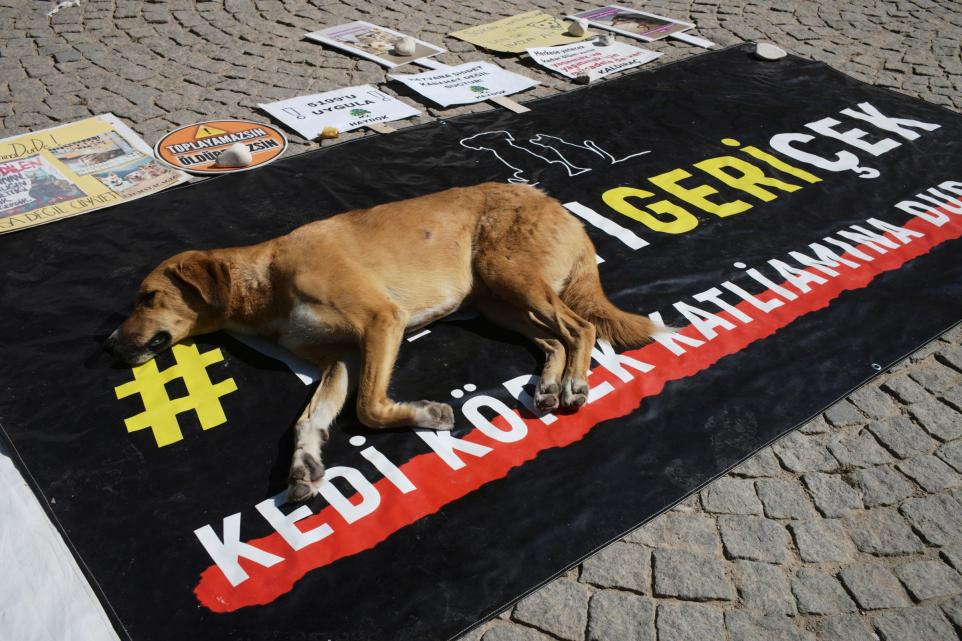

A new law passed by the Turkish Grand National Assembly has sparked outrage among animal welfare groups and opposition parties. Dubbed the “massacre law” by critics, the legislation mandates the removal of millions of stray dogs from Turkey’s streets, a move feared to result in widespread euthanasia of the animals.
President Recep Tayyip Erdogan’s government pushed for the law’s approval, citing the growing number of stray dogs, estimated at around four million, and concerns over public safety due to dog attacks. While the law focuses on dogs, the large stray cat population in Turkey remains unaffected.
Protests and Public Outcry
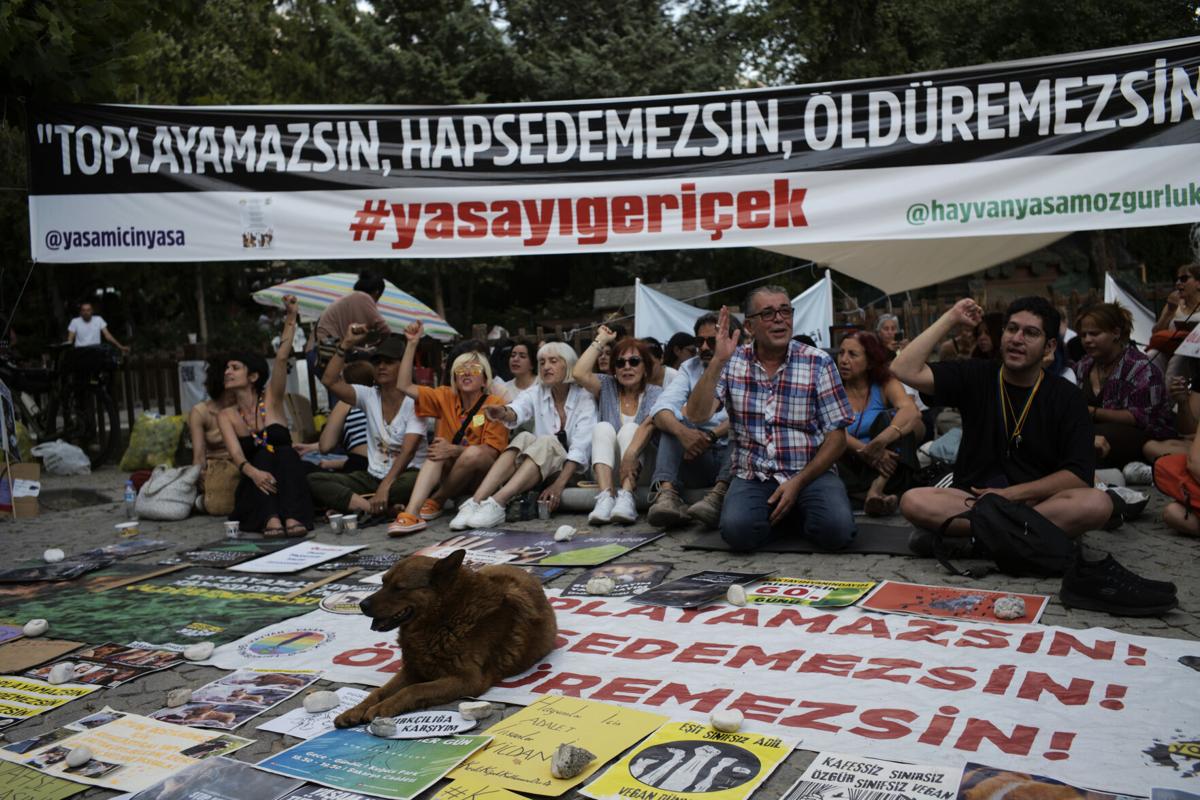
Demonstrations erupted across Turkey, with protesters gathering in major cities like Istanbul and Ankara. In Istanbul’s Sishane Square, hundreds gathered, holding signs and chanting slogans against the law. “Your massacre law is just a piece of paper for us,” declared organizers, emphasizing a message of solidarity and compassion over the government’s stance.
In Ankara, animal lovers protested outside municipal offices, urging the government to halt the law’s implementation. Political parties, including Turkey’s main opposition party, the Republican People’s Party (CHP), have expressed their intent to challenge the law in the Supreme Court. CHP deputy Murat Emir condemned the legislation as “morally, conscientiously, and legally broken.”
International Reactions and Concerns
The law has also drawn criticism from international animal welfare organizations. The Humane Society International expressed concerns over the potential for unnecessary suffering and death among stray animals, criticizing the law as a short-term solution lacking long-term vision.
The legislation requires municipalities to collect stray dogs, house them in shelters, and provide medical care, including vaccination, neutering, and spaying. Dogs deemed in pain, terminally ill, or posing a health risk to humans may be euthanized. However, many question the feasibility of these measures, given the financial constraints faced by local governments and the scarcity of adequate shelters.
Veterinarian Turkan Ceylan warned that the lack of sufficient shelter space could lead to increased euthanasia. Despite assurances from Justice Minister Yilmaz Tunc that unnecessary killings would be punished, skeptics fear the law could be misused to target opposition-held municipalities, where mayors may face prison sentences for failing to comply.
Global Perspectives on Stray Dog Management
Turkey’s new law brings into focus how different countries manage stray dog populations. In India, for example, the Animal Birth Control (Dogs) Rules, 2001, emphasize humane approaches, including sterilization and vaccination, followed by releasing the dogs back into their original territories. This method has been widely supported by animal welfare groups and volunteers who regularly feed and care for stray dogs.
In contrast, countries like Australia and some parts of the United States have implemented stricter measures, including euthanasia, to control stray populations, citing public health and safety concerns.
Social Media Reactions and Public Sentiment
Social media platforms have become hotbeds of discussion on Turkey’s new law, with hashtags like #StopTheMassacreLaw and #ProtectStrays trending on Twitter. Animal rights activists and concerned citizens have shared heart-wrenching stories and images of stray dogs, urging the government to reconsider the legislation. Some users have highlighted the cultural significance of dogs in various communities and criticized the government’s approach as inhumane and draconian.
As Turkey faces mounting domestic and international pressure, the future of its stray dog population remains uncertain. The controversy over the “massacre law” underscores broader debates about animal rights, public safety, and governmental accountability, both within Turkey and on the global stage. For many, the issue is not just about dogs but about the values of compassion and humanity in society.
Leave a Comment