

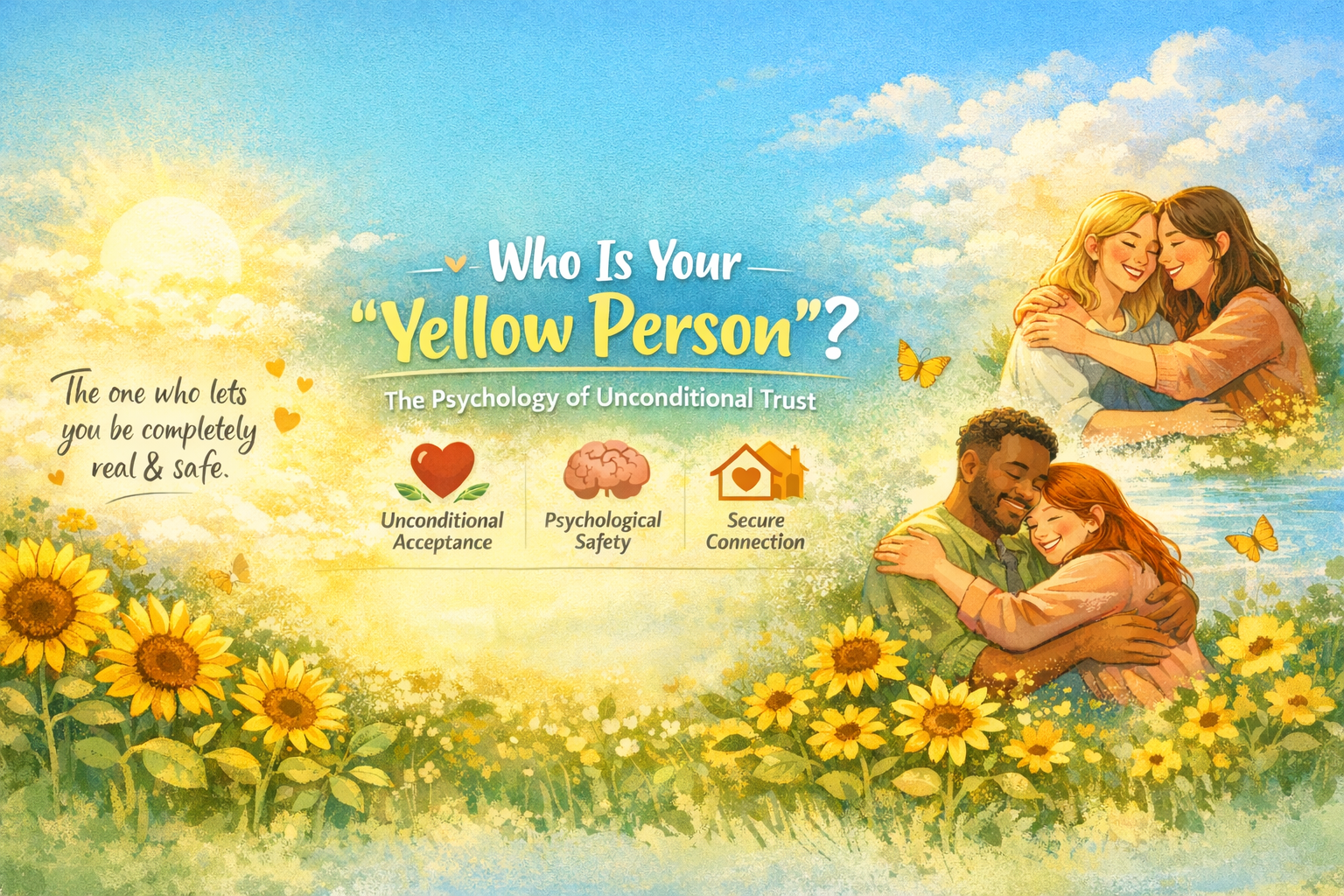

In the tapestry of our lives, some people don’t just exist—they illuminate. They feel like warmth on a cold day, like a pause button in chaos. These are our “Yellow Persons.” The ones we can turn to without rehearsing our words, filtering our emotions, or fearing judgment.
But this idea isn’t just poetic—it’s deeply psychological.
Let’s unpack where this concept comes from, why it matters, and why every human—regardless of age, culture, or background—needs a “yellow person” in their life.
What Is a “Yellow Person” Psychologically?
A “Yellow Person” represents someone who offers unconditional trust, acceptance, and emotional safety. In psychology, this aligns closely with the concept of Unconditional Positive Regard, introduced by renowned psychologist Carl Rogers in the 1950s.
Rogers believed that humans grow best in environments where they are:
- Accepted without conditions
- Valued without judgment
- Allowed to be authentic
In simple words:
A yellow person lets you be you—without needing to explain, justify, or pretend.
The Science Behind It: Why We Need This Kind of Person
1. Unconditional Positive Regard (Carl Rogers)
This theory suggests that when people feel accepted regardless of their flaws or mistakes, they develop:
- Higher self-worth
- Emotional resilience
- Better mental health
A yellow person mirrors this acceptance in real life—not as a therapist, but as a human presence.
2. Attachment Theory
Psychologists John Bowlby and Mary Ainsworth showed that secure emotional bonds help individuals:
- Regulate emotions
- Handle stress better
- Form healthier relationships
A yellow person often becomes a secure base—someone you return to when the world feels overwhelming.
3. Psychological Safety (Modern Research)
Organizational psychologist Amy Edmondson popularized the term psychological safety, showing that people perform and grow better when they feel safe to:
- Speak honestly
- Admit mistakes
- Show vulnerability
This applies just as strongly to personal relationships as it does to workplaces.
Authenticity: The Gift a Yellow Person Gives You
When you’re around your yellow person:
- You don’t edit your thoughts
- You don’t fear being “too much”
- You don’t worry about being misunderstood
This freedom allows authentic self-expression, which psychologists say is crucial for:
- Emotional clarity
- Self-awareness
- Personal growth
Authenticity isn’t about being perfect—it’s about being real. And realness needs safety.
Why This Concept Is Relevant for Everyone
In a world of:
- Social media filters
- Constant comparison
- Performative relationships
A yellow person becomes rare—and essential.
Whether you’re a student, a professional, a creator, a parent, or simply navigating life, having even one non-judgmental person can:
- Reduce anxiety
- Prevent emotional burnout
- Improve decision-making
- Strengthen self-trust
And yes—this person can be a best friend, a sibling, a partner, or sometimes even you to yourself.
Did You Know? (Trivia & Fun Psychology Facts)
- 💡 Did you know? Studies show that people with at least one emotionally safe relationship are significantly more resilient to stress.
- 💡 The human brain literally calms down in the presence of someone it trusts—heart rate and cortisol (stress hormone) levels drop.
- 💡 Carl Rogers’ theory was considered radical in its time because it challenged the idea that people need criticism to improve.
- 💡 Emotional safety activates the brain’s growth mode, while judgment activates defense mode.
- 💡 The color yellow is often associated with warmth, safety, and optimism in color psychology—making the metaphor even more fitting!
Can You Be Someone’s Yellow Person?
Absolutely.
Being a yellow person doesn’t mean fixing problems or giving advice. It means:
- Listening without interrupting
- Holding space without judgment
- Offering presence over opinions
Sometimes, the most healing words are:
“I’m here. You’re safe. I’m not judging you.”
Final Thought
Take a moment today to appreciate that yellow person in your life—the one who feels like emotional sunshine. And if you don’t have one yet, remember: the ability to create such a bond begins with authenticity, empathy, and trust.
Because in a complicated world, safe people are everything.
Leave a Comment