

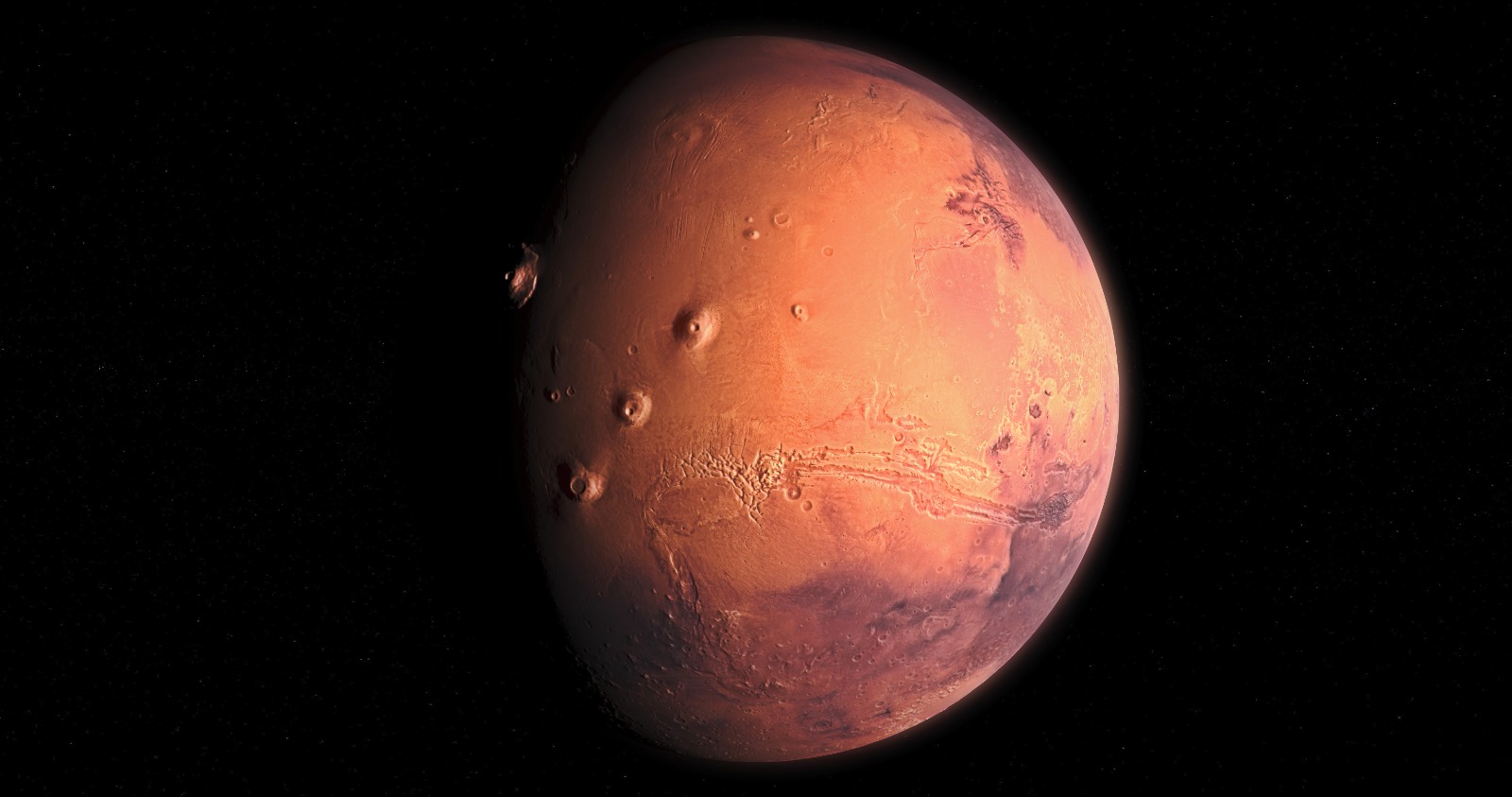

Ever heard of auroras? They’re those amazing natural light shows you might have seen in photos from Earth’s poles, like the Northern Lights. But guess what? Mars has them too! Recently, NASA’s MAVEN (Mars Atmosphere and Volatile Evolution) orbiter captured something super cool—a purple aurora, nicknamed “purple rain.” Let’s dive into this Martian magic!
What are Auroras?
Auroras happen when charged particles from the sun hit a planet’s atmosphere. On Earth, our strong magnetic field guides these particles to the poles, creating those beautiful, colorful lights. Mars, however, is a bit different.
Mars vs. Earth: The Aurora Showdown
Mars doesn’t have a strong global magnetic field like Earth. It lost its self-generated magnetic field billions of years ago. Now, when solar storms send waves of charged particles toward Mars, there’s no magnetic shield to protect it. These particles slam right into Mars’ atmosphere, lighting it up in spectacular auroras that can cover the entire planet!
The Purple Rain Phenomenon
From May 12 to May 20, 2024, MAVEN’s Imaging Ultraviolet Spectrograph captured an extraordinary purple aurora on Mars. This happened when super energetic solar particles collided with the Martian atmosphere. The result? A dazzling purple glow that NASA aptly called “purple rain.”
MAVEN: The Martian Explorer
Launched in November 2013, MAVEN’s mission is to study Mars’ atmosphere to understand its climate history and the processes causing atmospheric loss. Some of MAVEN’s coolest discoveries include:
- Atmospheric Escape: MAVEN found that solar winds are stripping away Mars’ atmosphere. Over time, this contributes to Mars transforming from a once wetter planet to the dry world we see today.
- Unique Auroras: Besides the purple aurora, MAVEN discovered other Martian light shows like the “Christmas Lights” aurora and a proton aurora, which are unique to Mars.
- Atmospheric Pulsations: MAVEN revealed that Mars’ atmosphere pulsates three times nightly and oscillates every 4.5 Martian hours. This provides insights into the planet’s dynamic atmosphere.
The Importance of MAVEN’s Findings
The images of the purple aurora give scientists valuable information about how solar wind interacts with Mars’ atmosphere. This helps us understand Mars’ climate history and its potential to support life in the past. The data also highlight the power and limitations of our current space research technology, as the intense solar storm during the purple aurora maxed out MAVEN’s sensors!
So, why is this important for us Earthlings? Understanding Mars’ past helps us piece together the story of our own planet and the potential for life elsewhere in the universe. Plus, isn’t it just amazing to think about a purple aurora lighting up the sky of another world?
Stay curious and keep exploring! 🚀✨
Feel free to share your thoughts or ask questions in the comments below. We love hearing from you! 🌟
Leave a Comment