

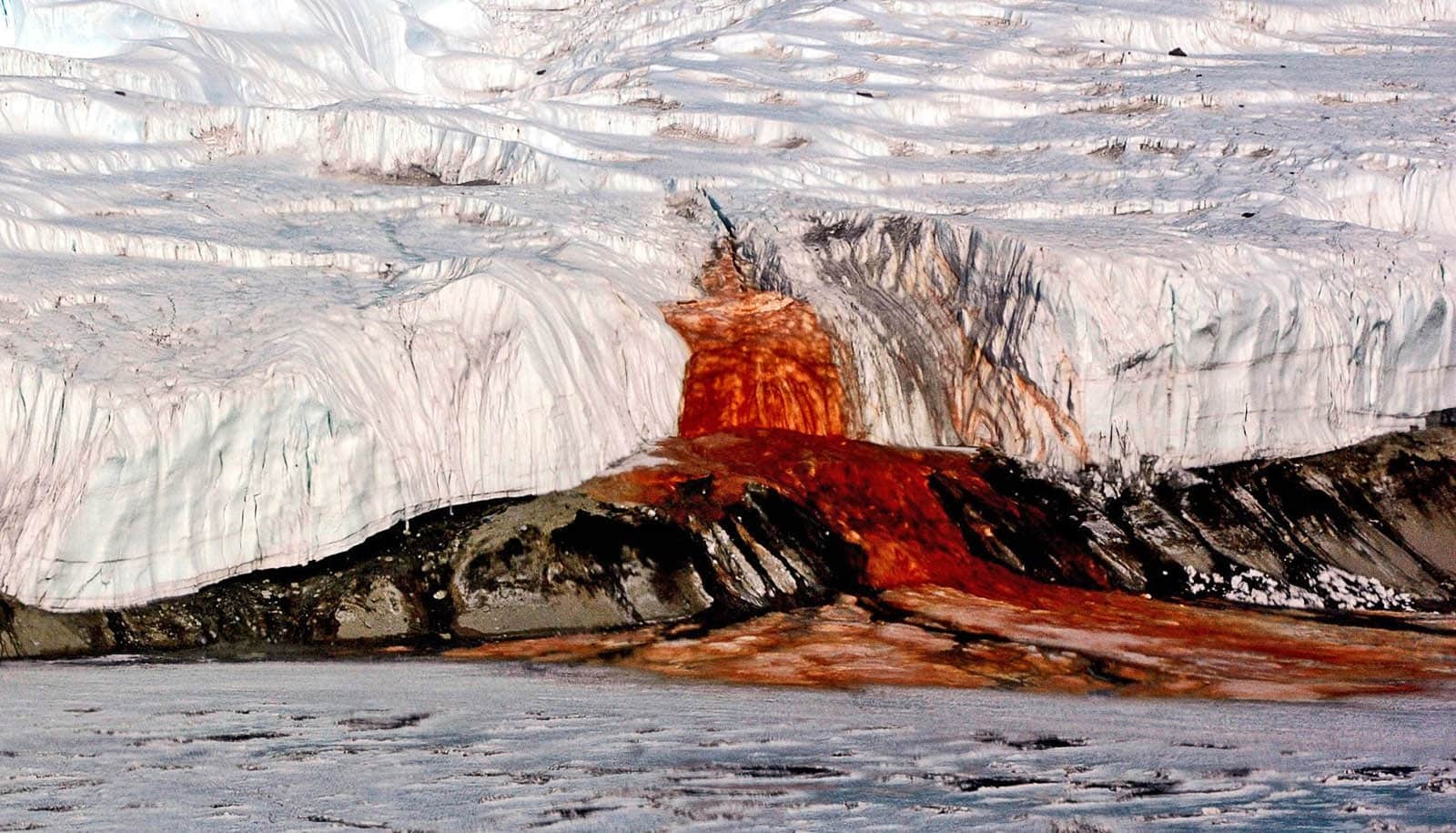

Nestled in the icy embrace of East Antarctica, a startling natural phenomenon known as Blood Falls offers a vivid contrast against the pristine white of Taylor Glacier. This remarkable sight, with its iron-rich waters flowing sporadically in a striking crimson cascade, has fascinated scientists and explorers alike since its discovery over a century ago.
A Historical Perspective
Blood Falls were first documented in 1911 by geographer and explorer Thomas Griffith Taylor during the Terra Nova expedition. Despite the overall tragic fate of the expedition, Taylor survived and his discoveries were immortalized in the naming of Taylor Glacier and Taylor Valley, where the crimson waters emerge. Initially, Taylor and his contemporaries attributed the eerie red colour to red algae, a theory that has since been debunked.
The Science Behind the Spectacle
Modern research has revealed that the red hue is due to iron-rich waters stored beneath Taylor Glacier. When this water, rich in iron, comes into contact with the oxygen in the air, a chemical reaction occurs, oxidizing the iron and giving the water its blood-red appearance. Unlike the glacier’s melt water, the water from Blood Falls is salty, indicating a separate, briny source within the glacier.
In 2017, scientists unearthed the hidden source of this phenomenon: a sub glacial reservoir located approximately 1,300 feet beneath the ice and 300 feet from the waterfall. The size of this reservoir remains unknown, but it is believed to have formed when ancient seawater inundated the McMurdo Dry Valleys, including Taylor Valley, before the area froze over. Estimates of this flooding event’s timing vary widely, ranging from 5.5 million to 20,000 years ago.
Anomalies and Mysteries
One of the most intriguing aspects of Blood Falls is that the water remains liquid despite the glacier’s sub-zero temperatures. This is attributed to the heat released during the freezing process and the presence of salts, which lower the freezing point of water. “Taylor Glacier is the coldest known glacier to have persistently flowing water,” stated Erin Pettit, a professor at Oregon State University, in a 2017 interview with Live Science. Interestingly, the water discharge at Blood Falls is episodic rather than continuous, a phenomenon yet to be fully understood.
Potential for Extra-terrestrial Insights
In 2019, an analysis of the sub glacial reservoir revealed the presence of microorganisms within the briny waters. This discovery has significant implications, potentially offering new insights into the search for life beyond Earth. The extreme conditions under which these microorganisms thrive could mirror environments on other planets or moons, guiding future astrobiological studies.
As researchers continue to explore the mysteries of Blood Falls, this unique Antarctic phenomenon stands as a testament to the planet’s enduring capacity to surprise and intrigue us, revealing secrets that have been locked in ice for millennia.

Leave a Comment