



The construction industry is experiencing a groundbreaking change thanks to 3D printing technology. This innovation is transforming everything from high-rise apartment buildings to eco-friendly homes, reshaping architectural designs and pushing the boundaries of traditional construction practices.
El Cosmico, a unique hotel and campground in Marfa, Texas, is making waves with its expansion featuring the world’s first 3D-printed hotel. Owner Liz Lambert announced plans for 43 new hotel units and 18 residential homes across 60 acres, utilizing advanced 3D printing technology to create distinctive architectural designs at a scale that traditional construction finds challenging.
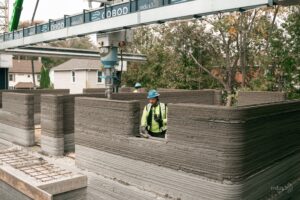
The project is underway with the construction of its first two units—a three-bedroom home and a single-room hotel unit—boasting impressive 12-foot-high walls. The printing is executed by ICON’s Vulcan, a large 3D printer that resembles a crane, delivering layers of a specialized cement-based material called Lavacrete. This material is tailored for optimal strength and affordability, with workers adjusting its components based on environmental conditions like humidity and temperature.
Set for completion by 2026, the new hotel units will offer nightly rates ranging from $200 to $450, promising a creative and modern experience for guests in the eclectic setting of Marfa.
Did You Know?
3D printing is making remarkable strides in construction around the world, with several groundbreaking projects showcasing its capabilities:

World’s First 3D-Printed Temple in India
In November 2023, world’s first 3D-printed temple was inaugurated in Siddipet, Telangana in India. Spanning 4,000 square feet and reaching 35.5 feet in height, this temple features distinct sanctuaries for Lord Ganesha, Lord Shiva, and Goddess Parvati, all built within three months using locally developed 3D printing technology.
World’s First 3D-Printed Mosque in Saudi Arabia
The Kingdom of Saudi Arabia is home to the world’s first 3D-printed mosque, spanning an area of 5,600 sqm. Located within the Al-Jawhara suburb of Jeddah, the mosque stands as a tribute to the late equestrian Abdulaziz Abdullah Sharbatly. The mosque’s construction was completed within six months and it was unveiled in March 2024.
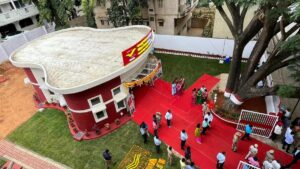
World’s First 3D-Printed Post Office in India
Opened in August 2023 in Bengaluru, India’s and world’s first 3D-printed post office was completed in just 43 days. Covering 1,021 square feet, it cost approximately 2.6 million rupees (around $31,200), significantly lower than traditional construction costs.
World’s First 3D-Printed Steel Bridge in the Netherlands
The MX3D Smart Bridge, opened in Amsterdam in the Netherlands in July 2021, is the world’s first 3D-printed steel bridge. The 12-metre-long bridge took over four years in the making. Created using wire and arc additive manufacturing, this innovative structure supports pedestrian traffic and showcases the fusion of robotics with welding technology.

World’s First 3D-Printed Office Building in UAE
Dubai in UAE unveiled the ‘Office of the Future’ in May 2016, the world’s first 3D-printed office building, covering 250 square meters. Constructed in just 17 days using a special cement mixture, and installed on site within two days, the project reduced labor costs by over 50% compared to conventional methods.
World’s First 3D-Printed Apartment Building in China
In January 2015, a five-storey apartment building and a large villa were constructed in Jiangsu Province in China using 3D printing. The project incorporated recycled materials and was assembled on-site, demonstrating the potential for sustainable construction practices.
These projects highlight the transformative potential of 3D printing in various sectors, showcasing not only innovation in design and construction but also possibilities for cost reduction and sustainability.
Can 3D-printed Construction Displace Laboring Jobs?
3D-printed construction holds significant potential to transform the labor landscape in the construction industry. By automating tasks traditionally performed by manual labor, it can enhance productivity and reduce reliance on unskilled labor. The ability to create complex, innovative designs that are often unattainable through conventional methods is another key advantage.
However, this shift also raises concerns about job displacement, particularly for low-skilled workers. As 3D printing technology advances, some roles may become obsolete, while new opportunities will emerge for skilled workers in areas such as digital modeling and 3D printing operations.
To navigate this transition effectively, it’s crucial to manage the impact on the workforce. Upskilling and reskilling programs can help workers adapt to the new demands, focusing on integrating both masonry and digital skills. This approach will help ensure that the benefits of 3D printing are maximized while minimizing negative consequences for the labor market. Overall, the future of construction may involve a blend of traditional craftsmanship and advanced technology, requiring a workforce that is versatile and skilled in both realms.
Challenges in 3D-printed Constructions
While 3D printing in construction offers exciting possibilities, several challenges must be addressed for widespread adoption.
- Cost Barriers: The initial investment and ongoing maintenance costs for 3D printing technology can be significant, which may discourage some construction companies from transitioning to this method.
- Skill Development: Construction workers will need to gain new skills to effectively operate and maintain 3D printing equipment. Training programs will be essential to equip the workforce with the necessary expertise.
- Regulatory Adaptation: Current building codes and regulations may not accommodate 3D-printed structures, necessitating updates and adaptations. This process can be slow and may require collaboration between industry stakeholders and regulatory bodies.
- Material Safety and Durability: The materials used in 3D printing must meet rigorous safety and durability standards. Ongoing research is focused on developing suitable materials that can withstand various environmental conditions and ensure structural integrity.
Addressing these challenges will be crucial for the successful integration of 3D printing in construction, paving the way for a more efficient and innovative industry.
Conclusion
3D printing has already showcased its potential across various construction projects globally, highlighting its ability to enhance efficiency and safety. While it may not fully replace traditional construction labor, it can significantly reduce labor requirements, potentially saving companies 50–80% in labor costs.
Despite these benefits, the transition to 3D printing raises concerns about job displacement. As automation takes over certain tasks, in future laborers may find their roles at risk. To mitigate this impact, construction companies should proactively invest in reskilling and retraining programs. By preparing workers for roles that complement 3D printing technology—such as operating and maintaining printers, digital modeling, and quality control—companies can help ensure a smoother transition and preserve valuable workforce expertise.
Emphasizing a collaborative approach between technology and skilled labor will be key to maximizing the benefits of 3D printing in construction while minimizing negative effects on employment.


Leave a Comment