

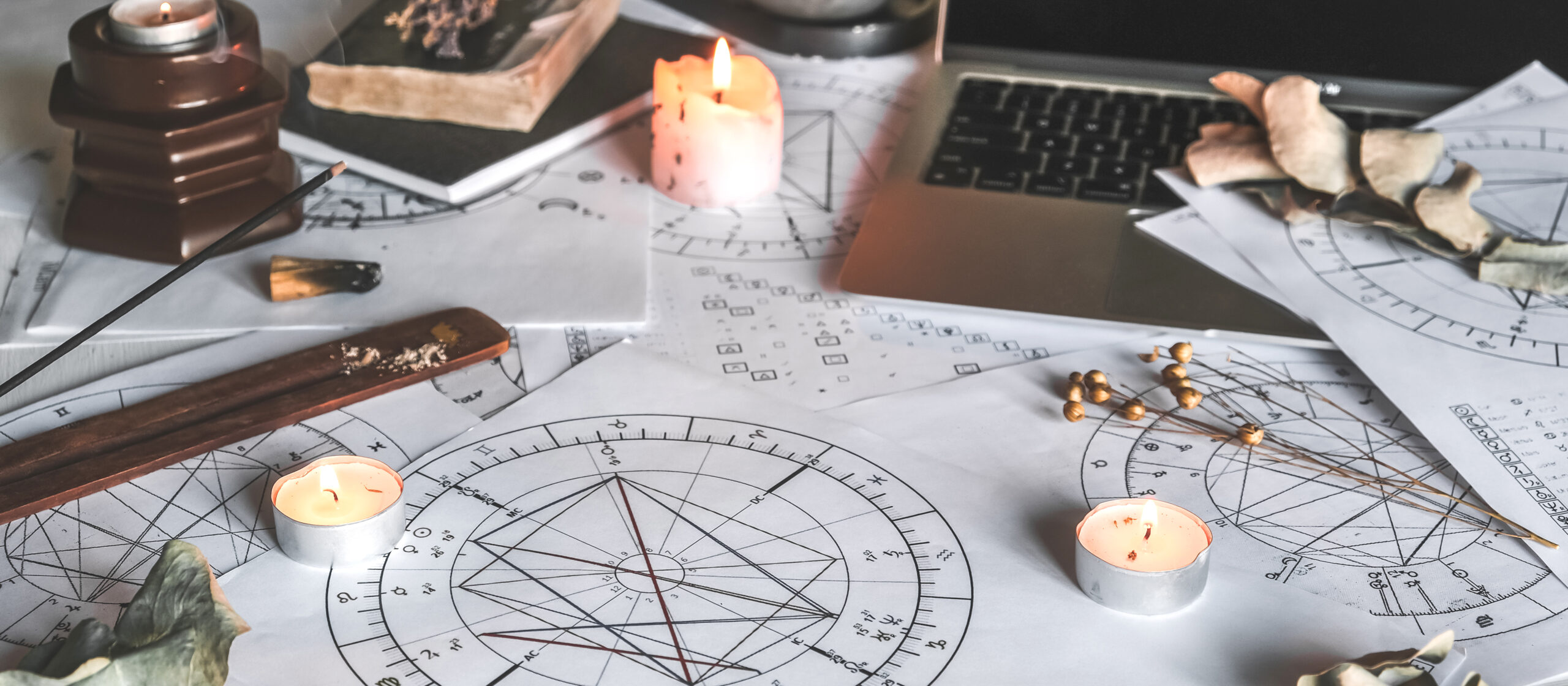

What is the Occult?
The term “occult” often evokes images of secret rituals, mystical symbols, and ancient books of forbidden knowledge. But what does it really mean? The word “occult” comes from the Latin occultus, meaning “hidden” or “secret.” It refers to practices, beliefs, and knowledge outside the realm of the ordinary or scientifically understood. This includes everything from astrology and alchemy to witchcraft and divination.
A Peek into the Past: The Early Beginnings
The roots of the occult can be traced back to ancient civilizations. In ancient Egypt, the priests practiced alchemy, believing in the transformation of base metals into gold. In the Middle Ages, mystics and scholars in Europe delved into astrology, tarot reading, and ceremonial magic. These practices often existed on the fringes of mainstream society, shrouded in secrecy and sometimes fear.
Did You Know?
The term “hermeticism” comes from Hermes Trismegistus, a mythical figure associated with wisdom and the occult sciences. The Hermetic texts are said to contain knowledge about the nature of the divine, the cosmos, and the human soul.
The Occult’s Evolution and Modern Relevance
Over the centuries, the occult has evolved and adapted to changing social and cultural contexts. In the 19th and early 20th centuries, occultism experienced a revival with movements like Theosophy and the Golden Dawn, which sought to synthesize various mystical traditions. Today, the occult is more mainstream than ever, thanks to the internet and pop culture. Shows like “Stranger Things” and “Chilling Adventures of Sabrina” have introduced occult themes to a new generation, while social media platforms have become hubs for sharing knowledge and experiences.
Gen Z and the Occult: A Curious Connection
Why is Gen Z so fascinated with the occult? This generation is known for its curiosity, openness, and desire to explore the unknown. The occult offers a way to explore spirituality and alternative belief systems outside traditional religion. For many, it’s about personal empowerment and understanding the mysteries of the universe.
Books to Dive Into
- “The Secret Teachings of All Ages” by Manly P. Hall – A comprehensive introduction to esoteric philosophy and occult history.
- “Witchery: Embrace the Witch Within” by Juliet Diaz – A modern guide to witchcraft and connecting with your inner power.
- “The Book of Thoth” by Aleister Crowley – A deep dive into tarot, written by one of the most famous occultists of the 20th century.
Trivia Time!
Did you know that the Ouija board was originally marketed as a fun parlor game in the 1890s? It wasn’t until much later that it became associated with communicating with spirits!
The Social Scene and Legal Landscape
The occult has found a thriving community online, where people share experiences, resources, and support. However, the rise of interest has also led to some backlash and legal scrutiny. For example, in some countries, certain occult practices are still illegal or heavily regulated. In India, the practice of black magic and witchcraft has been associated with superstition and fraud, leading to various laws aimed at curbing such activities.
The Future of the Occult: What Lies Ahead?
As we move further into the digital age, the occult is likely to continue evolving. With virtual reality and augmented reality, who knows what new forms of occult exploration might emerge? One thing is certain: the human fascination with the unknown and the mystical will never fade.
Wrapping Up
Whether you’re a curious newcomer or a seasoned practitioner, the occult offers a rich tapestry of history, mystery, and potential. It’s a reminder that there are still many things in the universe beyond our understanding—and that’s part of what makes life so fascinating!
Here are some famous figures in the field of the occult, each known for their unique contributions:
- Aleister Crowley (1875–1947)
Often called “The Great Beast,” Crowley was a British occultist, writer, and ceremonial magician. He founded the religious philosophy of Thelema and wrote extensively on the subject of magic and mysticism. His works, like The Book of the Law and The Book of Thoth, remain influential in occult circles.
- Helena Blavatsky (1831–1891)
A Russian occultist and co-founder of the Theosophical Society, Blavatsky is best known for her work in popularizing Eastern philosophies in the West. Her books, such as The Secret Doctrine and Isis Unveiled, are considered foundational texts in modern esotericism.
- Manly P. Hall (1901–1990)
An American author and mystic, Hall is renowned for his book The Secret Teachings of All Ages, which explores esoteric philosophies, symbolism, and occult history. He also founded the Philosophical Research Society, which continues to promote his work.
- Gerald Gardner (1884–1964)
Often considered the father of modern Wicca, Gardner was a British civil servant and occultist who played a key role in bringing the practice of witchcraft into the public eye. His books, including Witchcraft Today and The Meaning of Witchcraft, are seminal works in the Wiccan tradition.
- Dion Fortune (1890–1946)
A British occultist and author, Dion Fortune was a significant figure in the early 20th-century occult revival. She founded the Fraternity of the Inner Light and wrote several influential books, including The Mystical Qabalah and Psychic Self-Defense.
- Eliphas Levi (1810–1875)
Born Alphonse Louis Constant, Levi was a French occult author and ceremonial magician. His works, such as Transcendental Magic and The Key of the Mysteries, are considered classics in the field and have influenced many subsequent occultists.
- Madame Lenormand (1772–1843)
A famous French fortune-teller and cartomancer, Madame Lenormand was known for her use of tarot and other divination methods. She is credited with popularizing the Lenormand cards, a divination tool still used today.
- Alphonse Mucha (1860–1939)
A Czech Art Nouveau painter and decorative artist, Mucha was deeply interested in mysticism and the occult. Though not primarily an occultist, his artwork often featured esoteric and mystical themes, and he was involved with the Czech occult community.
These individuals have left a lasting legacy in the world of the occult, influencing countless others and helping to shape modern understandings of mysticism and esoteric practices.
India has a rich tradition of mystical and occult practices, with several notable figures who have contributed to this field:
- Shri Ramakrishna Paramahamsa (1836–1886)
A revered Indian mystic and spiritual leader, Shri Ramakrishna explored various spiritual paths, including tantra, Vedanta, and bhakti. His teachings emphasized the universality of religious experiences, and he is considered a significant figure in the revival of Hinduism in the 19th century.
- Swami Vivekananda (1863–1902)
A disciple of Ramakrishna, Swami Vivekananda played a crucial role in bringing Indian philosophies and spiritual practices to the West. His teachings on Vedanta and Raja Yoga have had a lasting impact on both Indian and Western esoteric traditions.
- Meher Baba (1894–1969)
An Indian spiritual master who claimed to be the Avatar of the age, Meher Baba’s teachings blend elements of Sufism, Vedanta, and other spiritual traditions. He is known for his emphasis on love and the spiritual path, and his followers regard him as a significant figure in modern mysticism.
- Gopi Krishna (1903–1984)
An Indian yogi, mystic, and writer, Gopi Krishna is known for his work on Kundalini awakening, a spiritual energy believed to reside at the base of the spine. His experiences and writings have contributed to a greater understanding of Kundalini and its effects on the human mind and body.
- Osho (Bhagwan Shree Rajneesh) (1931–1990)
A controversial spiritual leader and mystic, Osho’s teachings encompassed meditation, mindfulness, and a synthesis of Eastern and Western philosophies. He founded the Rajneesh movement, which attracted a large following worldwide. His discourses often touched upon mystical and occult themes.
- Shirdi Sai Baba (Unknown–1918)
A revered Indian saint and spiritual leader, Shirdi Sai Baba is known for his teachings on love, forgiveness, and self-realization. His life is shrouded in mystery, and many stories of miracles and mystical experiences are associated with him.
- Sri Aurobindo (1872–1950)
A philosopher, yogi, and poet, Sri Aurobindo’s teachings explore the potential of human consciousness and spiritual evolution. His work on Integral Yoga seeks to integrate spiritual practice with everyday life, and his writings delve into mystical experiences and the transformation of consciousness.
These figures have significantly influenced Indian spiritual and occult traditions, contributing to a rich tapestry of mystical and esoteric knowledge.

Leave a Comment