



As the year ends, millions of people across the globe eagerly await sparkling decorations, colourful lights, delicious food, cheerful music, playful jokes, and exciting gifts. Yes, Christmas is just around the corner! But how much do you really know about this festive holiday?
Let’s explore some fun facts about Christmas…
Xmas is Older than you Think!
The name Christmas comes from the Old English phrase Cristes maesse, meaning ‘Christ’s mass.’ The word was recorded in 1131. But what about ‘Xmas’? Many people believe it’s just a modern abbreviation, but it actually dates back to the 16th century! An earlier version, X’temmas, dates to 1551. Around 1100 the term was written as Xp̄es mæsse in the Anglo-Saxon Chronicle. Xmas is found in a letter from George Woodward in 1753. Lord Byron used the term in 1811, as did Samuel Coleridge in 1801. The ‘X’ is believed to represent the Greek letter ‘Chi,’ the first letter of the Greek word for Christ, Χριστός (pronounced ‘Christos’). But, the Christian Writer’s Manual of Style, while acknowledging the ancient and respectful use of Xmas in the past, states that the spelling should never be used in formal writing!
Christmas Celebrated on Different Days!
Christmas is celebrated on December 25th in most parts of the world, the date chosen by the Roman Catholic Church to mark the birth of Jesus. However, the exact date of Jesus’ birth remains unknown! However, for those that continue to use the Julian calendar for their liturgical observances, this date corresponds to January 7 on the Gregorian calendar. In countries with large Orthodox Christian populations, such as Russia, Ukraine, and Romania, Christmas is observed on January 7th. Some Greek Orthodox Christians also celebrate Christmas on this date.
Christmas Trees Originated in Germany!
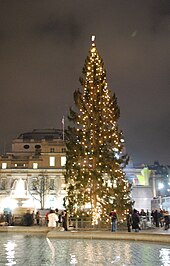
Christmas trees became popular in Victorian Britain, but the modern Christmas tree originated in Germany, where families set up a paradise tree in their homes on December 24, the religious feast day of Adam and Eve. The Christmas trees were first seen in 16th-century Germany, where people decorated fir trees with fruit and nuts – later adding sweets, paper shapes, and candles. Historians believe the roots of this festive tradition may trace back to the Romans and Ancient Egyptians, who used evergreen plants and garlands as symbols of eternal life.
Interestingly, every year, Norway sends a beautiful, home-grown Christmas tree to London, where it is adorned with lights in Trafalgar Square. Standing an impressive 20 meters tall, this magnificent tree is a gift to thank the UK for its support to Norway during World War II.
Santa Claus is Sinterklass!
Ever wondered how Santa Claus got his name? It comes from Sinterklaas, the Dutch word for Saint Nicholas, from the Netherlands. Saint Nicholas was a Turkish bishop of Greek descent during the Roman Empire. According to legend, he secretly dropped a sack of money through a window to help three girls pay their wedding dowries. He later became the patron saint of children. Sinterklaas traditionally rides a white horse and carries a big, red book which records whether each child has been good or naughty in the past year.
Santa’s Red Suit was Not Always Red!
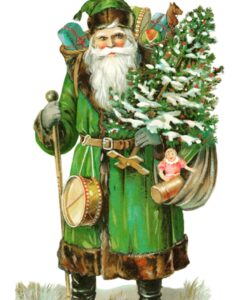
“Ho Ho Ho, Merry Christmas”. One can easily imagine Santa Claus saying his catchphrase with a chuckle as he holds his round belly. Dressed in a red and white suit that’s how we have always seen Santa Claus, haven’t we? But the jolly good old man hasn’t always dressed in red. Before 1930s there were many different variations of Santa, sporting a variety of different coloured garments and ranging in size from large to small. Claims were made that modern day image of Santa Claus was created by Coca-Cola, because his suit is the same colour as Coca–Cola’s branding but this isn’t actually true. The original red-suited Santa became popular in the US and Canada in the 19th century due to the influence of caricaturist and cartoonist Thomas Nast. Coca-Cola commissioned their depiction of Santa in 1931.
Other Christmas Visitors!
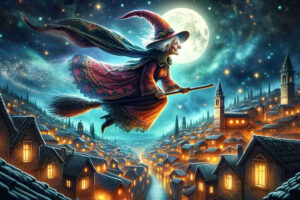
Santa Claus has been a Christmas tradition for over 200 years, but did you know there are many other christmas visitors around the world? In Italy, a kind witch named La Befana is said to fly around on a broomstick delivering toys to children. In Iceland, children leave their shoes under the window for 13 mischievous trolls known as the Yule Lads. If they’ve been good, they’ll find sweets in their shoes; if they’ve been bad, the Yule Lads leave a rotten potato! In Russia and other Eastern European countries, Ded Moroz evolved from a mix of harsh Slavic gods into a kinder gift-bringer, similar to Santa Claus. In Greece, St. Basil, also known as Agios Vassilis, is the Greek equivalent of Santa Claus. However, he delivers gifts on New Year’s Day, the feast day of St. Basil, instead of Christmas.
Jingle Bells is a Thanksgiving Song!
Jingle Bells is a song we all love to sing! But did you know that the song doesn’t actually mention Christmas, Jesus, or Santa Claus? That’s because it wasn’t originally a Christmas song! Written by James Lord Pierpont and published in 1857 under the title One Horse Open Sleigh, it was meant for the American holiday of Thanksgiving! The song was inspired by the sleigh races that were popular in the 1800s. Jingle Bells became associated with Christmas after it was performed on Washington Street in Boston on September 15, 1857. Interestingly, on December 16, 1965, it became the first song ever played in outer space.
When Christmas Celebrations were Banned!
Can you imagine Christmas celebrations being forbidden? Hard to believe, but in 1644, Christmas was made illegal in England, and shortly after, the same happened in the English Colonies in America! At that time, government officials believed the religious significance of Christmas had been forgotten, so they banned the holiday festivities. Despite this, some people continued to celebrate in secret until Christmas was legalized again nearly 20 years later.
Victorians Shaped the Christmas We Know
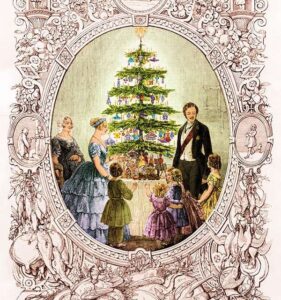
Many of today’s favourite Christmas traditions were popularised by Queen Victoria and the royal family in the 19th century. Several of the traditions we know today are rooted in Germanic heritage thanks to Queen Victoria’s husband, Prince Albert. In addition to reviving old customs like the Christmas tree, the Victorians created many new ones, including Christmas cards, crackers, the modern Santa Claus, the traditional Christmas dinner, and even the idea of taking a holiday! Before the Victorian era, it was common to work on Christmas Day!
Christmas Carols Have Survived Centuries!
Carols have been sung in Europe for thousands of years, but originally, they weren’t Christmas carols. They were pagan songs performed during Winter Solstice celebrations, often accompanied by dances around stone circles. The Winter Solstice marks the shortest day of the year, typically around December 22nd. The word “carol” itself actually means a dance or a song of praise and joy. While carols were once written and sung throughout all four seasons, only the tradition of singing them at Christmas has truly endured. The first Christmas carols in English appeared in a 1426 work by John Awdlay, a chaplain from Shropshire. Many of today’s most popular carols were printed in Piae Cantiones, a collection of late medieval Latin songs first published in 1582.
Japan and KFC Connection on Christmas!

Christmas and KFC have a connection in Japan. Yes, you read that right! Japanese people traditionally eat at Kentucky Fried Chicken (KFC) for Christmas dinner, thanks to a successful marketing campaign 50 years ago. The fried chicken party bucket went national in 1974 with the slogan “Kentucky is Christmas”, cementing the connection between fried chicken and Christmas in the minds of many Japanese. While Christmas isn’t a national holiday in the country, KFC has managed to make eating its packaged chicken meals a holiday tradition. In 1970’s, many foreigners came to eat at KFC in Japan because they couldn’t find a whole turkey or chicken anywhere else. A KFC employee, Takeshi Okawara saw an opportunity to cash in, and the company launched its first Christmas meal in 1974: chicken and wine for $10, a pricey meal at the time! It’s costly even today– the standard party box, with eight pieces of chicken, a shrimp gratin and a chocolate cake cost ¥4,700 ($29.91). KFC is so popular in Japan that customers must place their Christmas orders 2 months in advance.
 As we celebrate this joyful season, whether through cherished traditions or new discoveries, Christmas reminds us of the importance of kindness, love, and togetherness. It’s a time to create lasting memories with family and friends, spread goodwill, and reflect on the beauty of giving. Wishing you all a merry, peaceful, and heartwarming Christmas!

Leave a Comment