

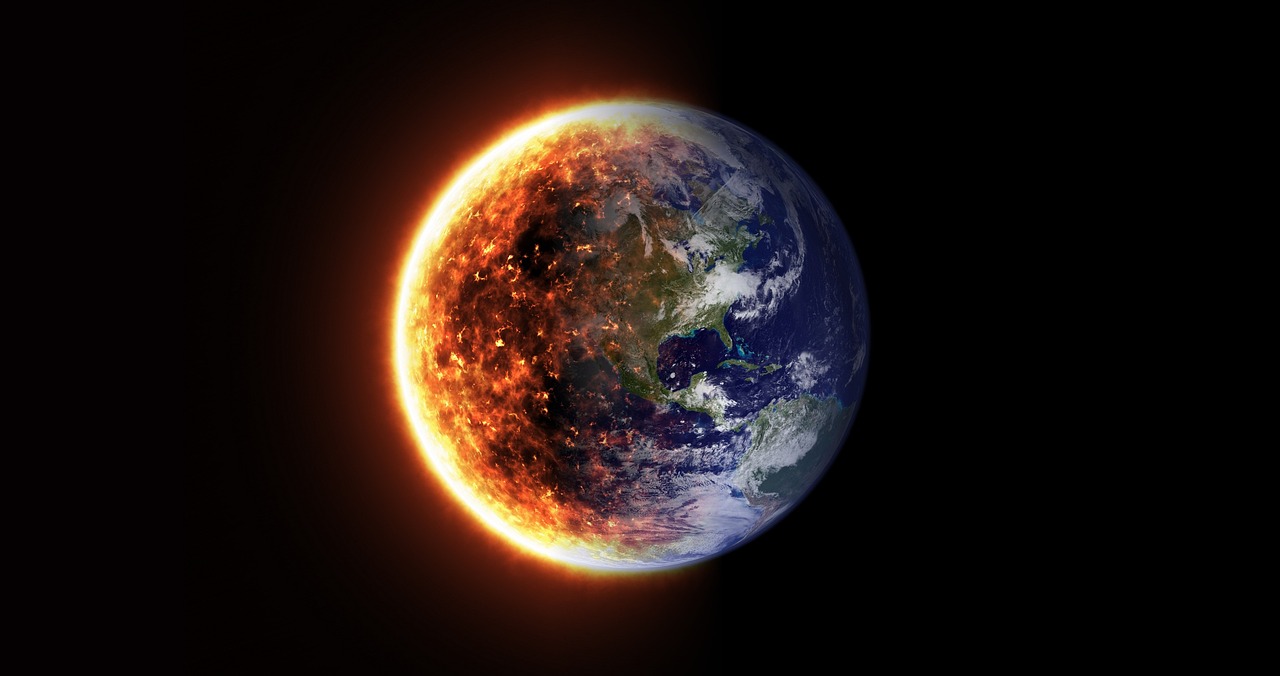

The India Meteorological Department (IMD) has said that 2024 was the warmest year on record in India since 1901.
The annual mean temperature in 2024 was 25.75 degrees Celsius, 0.65 degrees above the long-period average, making it the highest recorded since 1901. Long period average is the weather pattern recorded over a particular region for a given interval like 30 years.
The average maximum temperature stood at 31.25 degrees Celsius, 0.20 degrees above normal, the fourth-highest since 1901, as confirmed by Mrutyunjay Mohapatra, Director General of the India Meteorological Department (IMD), at a virtual press briefing.
The year 2024 now ranks as the warmest year on record since 1901, surpassing 2016, which had recorded a mean land surface air temperature 0.54 degrees Celsius above normal.
Hottest Year on Record Globally
Earth reached its warmest year on record in 2024, according to data from the European Union’s Copernicus Climate Change Service, Europe’s leading environmental monitoring program.
The Copernicus Climate Change service found that last year was the first to exceed the 1.5 degrees Celsius (2.7 F) limit above the pre-industrial average set by the 2015 Paris Agreement, an international treaty that aims to reduce and roll back climate change.
A yearly review report by two groups of climate scientists — World Weather Attribution and Climate Central — said that the world experienced an average of 41 more days of dangerous heat in 2024.
A Year of Climate Catastrophes
Throughout 2024, a series of reports from the World Meteorological Organisation (WMO) community highlighted the rapid pace of climate change and its far-reaching impacts on every aspect of sustainable development.
Record-breaking rainfalls were documented as well as catastrophic flooding, scorching heat waves with temperatures exceeding 50°C, and devastating wildfires. The organization found that climate change added 41 days of dangerous heat in 2024, harming human health and ecosystems in their report ‘When Risks Become Reality: Extreme Weather.’
Climate change also intensified 26 of the 29 weather events studied by World Weather Attribution that killed at least 3700 people and displaced millions.
Many other planetary vital signs also reached record levels, including ocean acidity, sea level rise, ice cover, heat-related mortality rates and loss of forest cover.
What’s on the Horizon for 2025?
The IMD projected that minimum temperatures across most of India are forecast to be higher than usual in January 2025, with exceptions in parts of eastern, northwest, and west-central regions. Maximum temperatures are also expected to exceed normal levels for much of the country, except for certain areas in northwest, central, and eastern India, along with central southern peninsular regions. However, the western and northern parts of central India are likely to experience more cold wave days than usual in January. The IMD also predicted that rainfall in northern India between January and March will likely be below average, at less than 86% of the long-period average.
The Met Office, the UK’s national weather and climate service, predicts that 2025 is likely to be one of the three warmest years for global average temperature, falling in line just behind 2024 and 2023. This would make 2025 one of the top three warmest years on record. Using recent observations and a 20-year average of global temperatures, the UK Met Office calculates the average global temperature for 2025 will fall between 1.29C and 1.53C above preindustrial temperatures.


Leave a Comment