

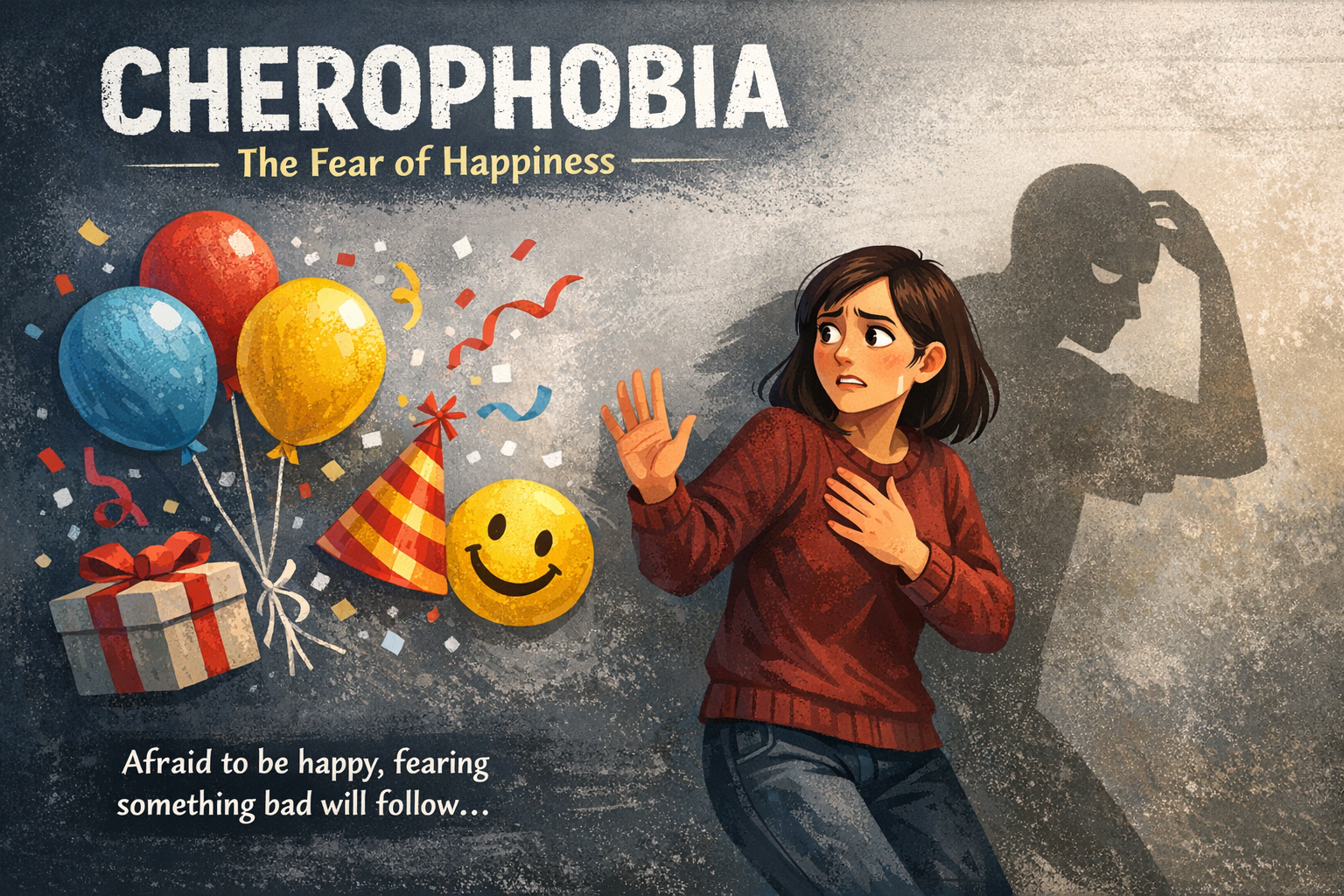

Have you ever met someone who pulls back just when life starts going well?
Someone who avoids celebrations, downplays achievements, or says things like “Don’t be too happy, something bad will happen”?
This fear of happiness has a name — Cherophobia.
What Is Cherophobia?
Cherophobia is a psychological phenomenon where a person feels afraid of being happy, believing that joy will be followed by tragedy, loss, or disappointment. While it is not officially classified as a mental disorder, psychologists recognize it as a real emotional pattern that can deeply affect a person’s life.
People experiencing cherophobia may:
- Suppress positive emotions
- Avoid celebrations, parties, or good news
- Feel anxious during moments of joy
- Believe happiness “tempts fate”
(Source: Psychology Today)
Why Would Anyone Fear Happiness?
At first glance, the idea sounds strange. Why fear something everyone wants?
Psychologists explain that cherophobia often develops from past emotional experiences. When happiness in the past was followed by pain — such as loss, betrayal, failure, or trauma — the brain begins to associate joy with danger.
Over time, the mind learns a harmful rule:
“If I don’t get too happy, I won’t get hurt.”
This belief may also be reinforced by:
- Childhood trauma
- Anxiety disorders
- Cultural beliefs that warn against “too much happiness”
- Superstitions that equate joy with bad luck
How Cherophobia Shows Up in Daily Life
Cherophobia doesn’t always look dramatic. It can be subtle and socially accepted.
For example:
- Someone avoids birthdays or achievements
- A person refuses to celebrate success at work
- They downplay good news with negativity
- They feel uneasy when life feels peaceful
Outwardly, it may look like humility or realism. Internally, it is often fear disguised as caution.
The Emotional Cost of Avoiding Joy
Avoiding happiness doesn’t prevent pain — it only prevents living fully.
People with cherophobia may:
- Miss meaningful moments
- Feel emotionally disconnected
- Experience chronic anxiety
- Struggle with relationships
Ironically, in trying to protect themselves from pain, they also block hope, pleasure, and emotional healing.
Can Cherophobia Be Treated?
Yes. Mental health professionals commonly recommend Cognitive Behavioral Therapy (CBT).
CBT helps individuals:
- Identify fear-based beliefs about happiness
- Understand the difference between correlation and causation
- Learn that joy does not “cause” tragedy
- Build emotional safety around positive emotions
The goal is not forced happiness, but permission to feel joy without fear.
A Gentle Truth About Happiness
Happiness does not guarantee safety — but neither does sadness.
Life contains uncertainty whether we smile or not. Avoiding joy does not stop loss; it only ensures that fear makes the decisions.
Learning to accept happiness, even briefly, is not tempting fate.
It is an act of emotional courage.
Did You Know?
The word cherophobia comes from the Greek word “chairo”, meaning to rejoice. Ironically, it describes the fear of the very thing the word celebrates.

Leave a Comment