

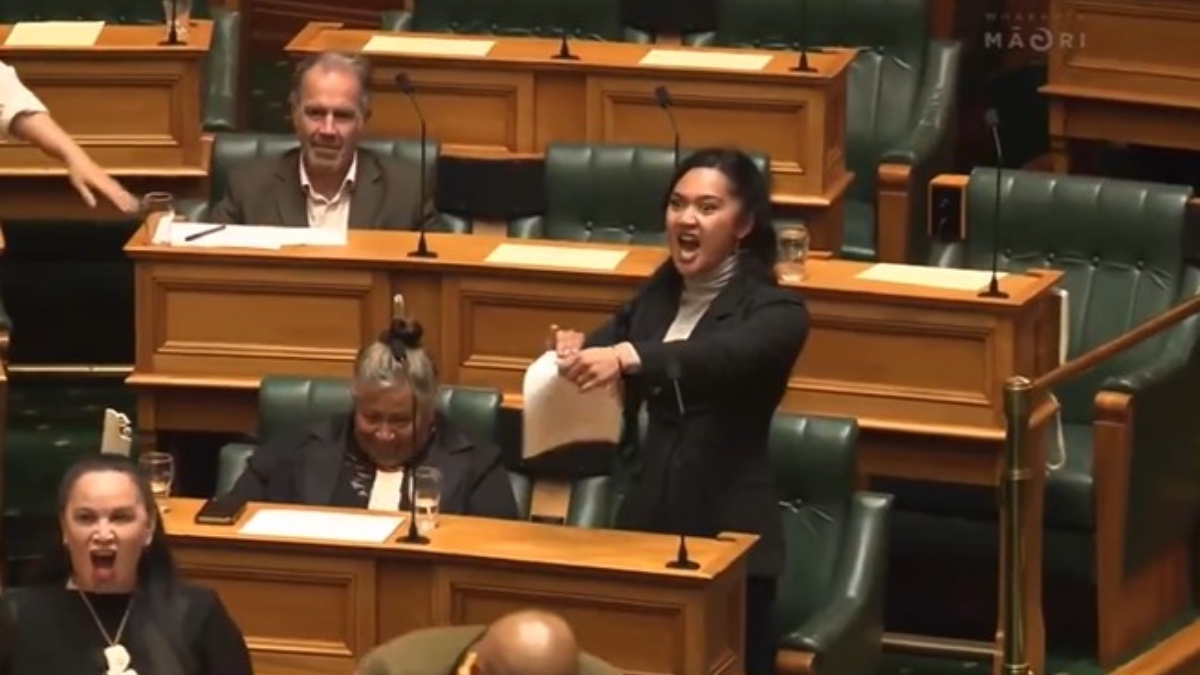

New Zealand’s parliament recently witnessed a dramatic blend of cultural defiance and legislative debate over the Treaty Principles Bill. This controversial proposal seeks to overhaul the 184-year-old Treaty of Waitangi, the founding agreement between the British Crown and the Indigenous Maori tribes. The treaty granted Maori tribes land rights and protection of their interests in return for ceding governance to the British—a delicate balance that continues to shape New Zealand’s legal and cultural landscape.
The bill, introduced by the ACT New Zealand party, aims to extend treaty rights to non-Indigenous citizens, sparking outrage among Maori communities. To protest, 22-year-old Maori legislator Hana-Rawhiti Maipi-Clarke tore up the bill and performed the haka—a powerful traditional Maori war dance—inside parliament, igniting both uproar and solidarity. Her suspension from parliament didn’t stop her determination; it symbolized the strength of Indigenous resistance.
Protests Around the World: When Parliament Turns Into a Stage
Protests in parliamentary settings aren’t uncommon, but they often take quirky or extraordinary forms. Here’s a list of notable, funny, and fascinating moments of dissent from legislative chambers worldwide:
1. Ukraine: Wrestling Matches in Parliament
Ukraine’s parliament has often been a hotspot for physical altercations. One notable incident occurred in 2010 when a debate over Russian naval bases devolved into a brawl, complete with punches, egg-throwing, and smoke bombs!
2. Taiwan: Bubble Tea and Brawls
In Taiwan’s legislature, protests often turn theatrical. In 2020, lawmakers hurled pig guts at each other during a debate over imported pork, and earlier instances have seen chairs and water balloons being used as weapons!
3. India: Paper Planes in the Lok Sabha
During a heated debate in 2018, opposition MPs folded copies of a contentious bill into paper planes and launched them across the chamber, much to the Speaker’s annoyance.
4. UK: Singing for Climate Change
In 2022, members of Extinction Rebellion interrupted the UK parliament by breaking into song during a debate on climate change. Their impromptu choir performance was unconventional yet memorable.
5. South Korea: Padlocking Parliament
In 2009, South Korean lawmakers from the opposition physically padlocked the doors of the National Assembly to block ruling party members from entering and passing a controversial media reform bill.
6. Japan: Silent Protest with Banners
Japanese lawmakers often resort to holding up banners in parliament instead of shouting or fighting. This peaceful method allows them to express their dissent clearly without disrupting proceedings too much.
Did You Know?
- The Haka dance, famously performed by New Zealand’s rugby team, is deeply rooted in Maori culture and often used to express defiance, unity, and resistance.
- The Treaty of Waitangi is often called New Zealand’s “Magna Carta” and has been the basis for resolving countless land disputes.
Trivia
- The shortest parliamentary session ever recorded lasted just 45 seconds—in Spain, due to lack of quorum.
- Taiwan’s legislature is nicknamed “The Zoo” because of its frequent chaotic protests.
- A lawmaker in Iceland once gave a knitting demonstration during a debate to highlight the importance of domestic industries.
Fun Facts
- Egg-throwing is a favorite form of protest in many parliaments, including Greece and Ukraine.
- A South African MP once showed up in a construction helmet to protest unsafe working conditions.
- In 2015, a Hungarian MP staged a silent protest by eating popcorn while his colleagues argued.
The Bigger Picture
Protests in parliamentary assemblies reflect the diversity of democratic expression worldwide. From the powerful haka in New Zealand to bubble tea battles in Taiwan, these moments remind us that politics can be a stage for creativity, resistance, and sometimes humor.
As New Zealand’s hikoi march continues, and as the world watches, the Treaty Principles Bill serves as a stark reminder of the delicate balance between cultural heritage and modern governance. The final outcome remains uncertain, but the passion of the Maori people is unmistakable—both in their protests and their pride.
Leave a Comment