

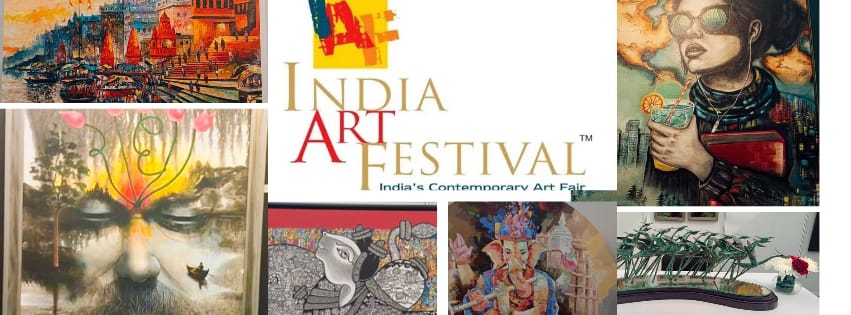

As winter sets in Delhi, the India Art Festival once again captured the city’s creative pulse. Delhi’s Constitution Club of India shed its bureaucratic poise and bloomed into a field of colour. It became the living heart of Indian contemporary art — a place where heritage met innovation, and where a nation of artists found collective voice.
India Art Festival returned to the capital— reaffirming its reputation as India’s one of the most awaited celebration of contemporary art.
Every corner pulsed with visual energy. Canvases gleamed under soft lights, sculptures demanded pause, and art lovers drifted from booth to booth in quiet awe.
The India Art Festival 2025 didn’t just bring art to Delhi; it transformed the city into a living, breathing gallery.
A Decade in Delhi, a Journey Nationwide
 India Art festival (IAF) returned for its 10th Delhi edition— and 35th nationwide from 7-9 November. Founded in 2008 by the Indian Contemporary Art Journal, the India Art Festival was born out of a simple but revolutionary idea — to democratize art.
In a world where galleries and exclusivity often gatekeep creativity, IAF envisioned an open arena where emerging artists, rural creators, and established masters could share equal space.
The festival has grown from a modest showcase into a national movement that connects painters, sculptors, and multimedia artists across India from metropolitan galleries to the small studios of semi-urban and rural creators.
This year, more than 450 artists, 25 galleries, and over 3,500 artworks occupied 100 booths, turning the Constitution Club into a labyrinth of colour and form.
Inaugurated by Mr. Keshav Chandra, Chairman of the New Delhi Municipal Council, and Dr. Sanjeev Kishor Gautam, Director General of the National Gallery of Modern Art, the event opened to a steady tide of collectors, critics, students, and the simply curious — each wandering through the nation’s creative diversity distilled into three days.
A Dialogue Between Worlds
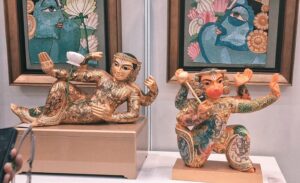 The festival’s layout followed its signature dual-pavilion format — a design that feels as symbolic as it is practical. On one side stood the Gallery Pavilion, where India’s most prominent art spaces displayed curated collections of masters and mid-career artists. On the other, the Artist’s Pavilion opened its arms to hundreds of independent creators from across the country.
Together, the two spaces formed a dialogue — between the curated and the raw, the established and the emerging, the metropolitan and the regional.
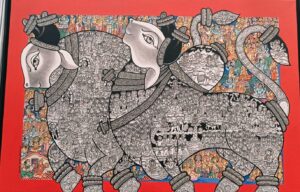 The Gallery Pavilion gathered India’s leading names: Gallery Pioneer, OPS Art Gallery, Uchaan, Eminent Art Gallery, Aura Planet, Healing Art Foundation, House of Emerge, Tela Art Gallery, and Traditional Art Gallery showcased works that spanned time and technique.
Adding an international note was Red Leaf Art Gallery (USA), making its debut at IAF — a subtle reminder that Indian art continues to speak to global audiences.
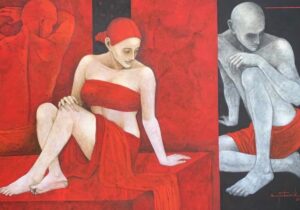
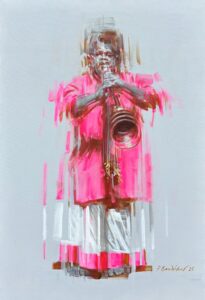
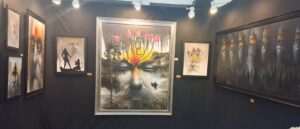 The Artist’s Pavilion was a mosaic of individual journeys — hundreds of personal visions woven into a collective portrait of India’s creative diversity. Here, names like Roop Chand, Om Thadkar, Pankaj Bawdekar, Anjali Prabhakar, Bhatari Shah, Susan Halfhide, Astha Gajwani, Taru Bhargava, and Vittal Muppidy stood shoulder to shoulder, each artist transforming their booth into an intimate studio of stories. Their works felt personal — portraits of emotion, identity, and place told in brushstrokes and clay.
Together, the two pavilions mirrored India itself: structured and spontaneous, traditional and experimental, refined yet restless.
Masters and Modernists
In the gallery section, the past conversed fluently with the present. Works by India’s modern masters — M. F. Husain, Anjolie Ela Menon, Krishen Khanna, Akbar Padamsee, Jogen Chowdhury, Paresh Maity, Manu Parekh, Lalu Prasad Shaw, T. Vaikuntam, and K. Laxma Goud — lent the festival a quiet gravitas. Their brushstrokes carried the weight of decades, their colours familiar yet freshly resonant in the context of newer art around them.
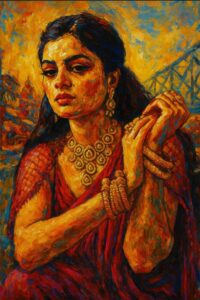
Across the aisle, contemporary names like Anand Panchal, Inderjeet Singh Grover, P. Gnana, and Nagesh Ghodke offered a more experimental vocabulary — vibrant palettes, mixed media, and forms that seemed to stretch beyond the frame.
The juxtaposition of eras was deliberate, and deeply effective: it traced India’s visual journey from modernism to the fluid, plural expressions of today.
Sculpting Illusion and Identity
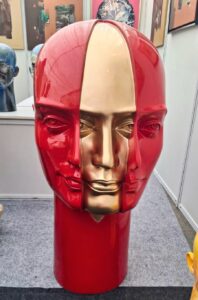
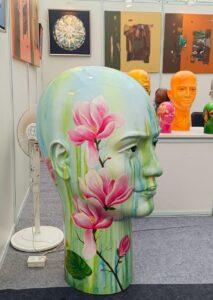
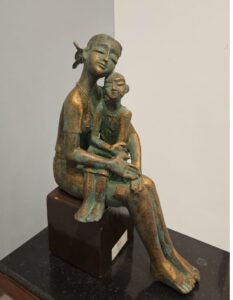
Among the most arresting installations was Hyderabad-based sculptor S. Kantha Reddy’s series of surreal faces. Each sculpture appeared to oscillate between solidity and mirage — textured surfaces that caught light and emotion with equal precision. Viewers lingered, drawn by the eerie familiarity of his forms.
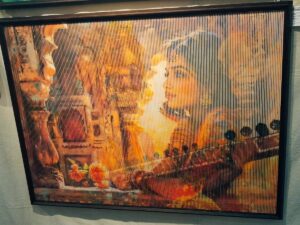 Elsewhere, illusion paintings, 3D works, and mixed-media experiments created immersive visual experiences. Traditional influences — from Pichwai motifs to tribal idioms — found themselves reinterpreted in urban, contemporary contexts. The result was an exhibition that felt like India itself: layered, restless, and always reinventing.
The Heartbeat of Indian Creativity
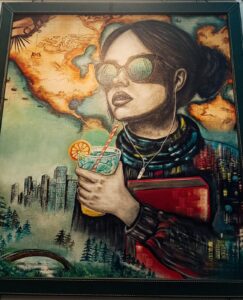 At India Art Fair, the evolution of Indian contemporary art becomes unmistakable. The themes reflect shifting landscapes — climate anxieties, urban alienation, gender identity, migration, and spiritual reimagining. Yet beneath the experimentation, there remains a shared thread of rootedness.
Indian art, as the festival reminds, continues to find new ways to reinterpret its heritage. It is confident enough to look outward, yet grounded enough to speak its own language.
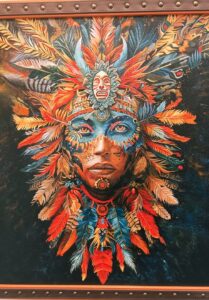 In every booth, in every brushstroke and sculpture, there was a reminder of what makes Indian art extraordinary: its ability to reflect the present while honouring the past, to be both local and universal, intimate yet monumental.
The India Art Festival 2025 told the story of India’s imagination — bold, diverse, and vividly alive.


Leave a Comment