

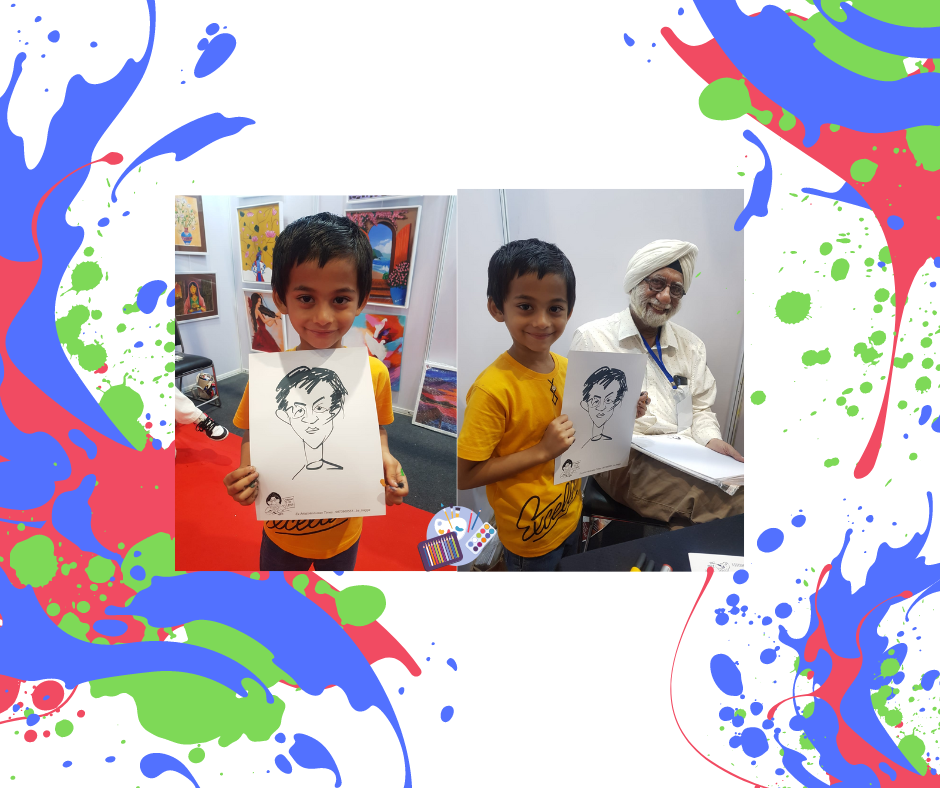

On a warm afternoon in Delhi, the bustling streets of the city were alive with the vibrant colours and creativity of an art exhibition. Stalls lined the venue, each showcasing unique art and crafts. Among them, one stall stood out—a small, unassuming setup with a simple signboard reading, “Caricature Drawing: Free or Pay As You Wish.” Behind the stall sat an elderly man, Bhupinder Singh Bagga, a former Hindustan Times artist known for his caricatures, with a tagline on his letterhead that read, “Through my eyes.”
A Moment of Pure Joy
As visitors roamed the exhibition, a young boy named Yagya Kandpal, just 7 years old, was drawn to the stall. Mesmerized by the quick strokes and exaggerated features in the caricatures, Yagya approached the artist with wide-eyed curiosity. “Would you draw me?” he asked, excitement bubbling in his voice.
Mr. Bagga, with a face etched by years of experience, broke into a warm smile. His eyes sparkled with joy as he invited Yagya to sit. With steady hands and a keen eye, he began sketching. In no time, Yagya’s caricature emerged on the paper, a playful and humorous version of himself. The boy’s laughter echoed through the stall as he saw his exaggerated features, capturing his youthful energy and innocence.
This simple interaction encapsulated the essence of caricature art—bringing smiles, capturing moments, and inspiring the next generation to embrace artistic expression.
The Art and Science of Caricature
Caricature art is a fascinating blend of observation and exaggeration. It involves highlighting the most distinctive features of a person in a humorous or satirical manner. While it often aims to entertain, caricatures can also be powerful tools for social and political commentary.
Did You Know? The word “caricature” comes from the Italian word “caricare,” which means “to load” or “exaggerate.” The art form dates back to the Italian Renaissance, with notable artists like Leonardo da Vinci dabbling in early forms of caricature.
Caricature as a Profession
In today’s digital age, caricature art has evolved beyond traditional paper and pen. It has found a place in various media, from editorial cartoons in newspapers and magazines to digital illustrations and animation. For aspiring caricature artists in India and around the world, the profession offers a range of opportunities:
- Editorial Caricatures: Many newspapers and online publications feature caricatures to provide a humorous take on current events.
- Entertainment Industry: Caricatures are widely used in animations, movies, and TV shows to add a comedic element.
- Events and Festivals: Live caricature drawing at events like weddings, corporate gatherings, and fairs is a popular attraction.
- Merchandise and Personalized Gifts: Custom caricature portraits are increasingly popular as personalized gifts and merchandise.
The Road to Becoming a Caricature Artist
To become a successful caricature artist, one doesn’t necessarily need formal education, though it can be beneficial. Key skills include:
- Observation: A keen eye for detail and the ability to observe and capture unique features.
- Exaggeration: The skill to exaggerate without losing the essence of the subject.
- Drawing Skills: A solid foundation in drawing and an understanding of proportions and expressions.
- Creativity and Humour: An imaginative mind and a sense of humour to bring caricatures to life.
For those interested, art schools and online courses offer training in illustration and caricature techniques. Additionally, practice and a strong portfolio are crucial for building a career in this field.
A Lasting Impact
The story of Mr. Bagga and young Yagya is a testament to the power of art to connect generations, bring joy, and inspire creativity. Caricature art, with its blend of humour and insight, continues to be a beloved form of expression around the world.
As Yagya left the stall, clutching his caricature and smiling from ear to ear, it was clear that this simple drawing had sparked something special in him. Perhaps one day, he too would pick up a pen and paper, ready to sketch the world as he sees it, “Through my eyes.”


बहुत अच्छा आर्टिकल। लिखने वाले ने ऐसे शब्दों से पाठक को बांधा कि एक बार पढ़ने का जो सिलसिला शुरू होता है वो आखिरी शब्द पर जाकर खत्म होता। बेहद इन्फोर्मेशन वाला आर्टिकल।
Thank you so much… keep exploring