

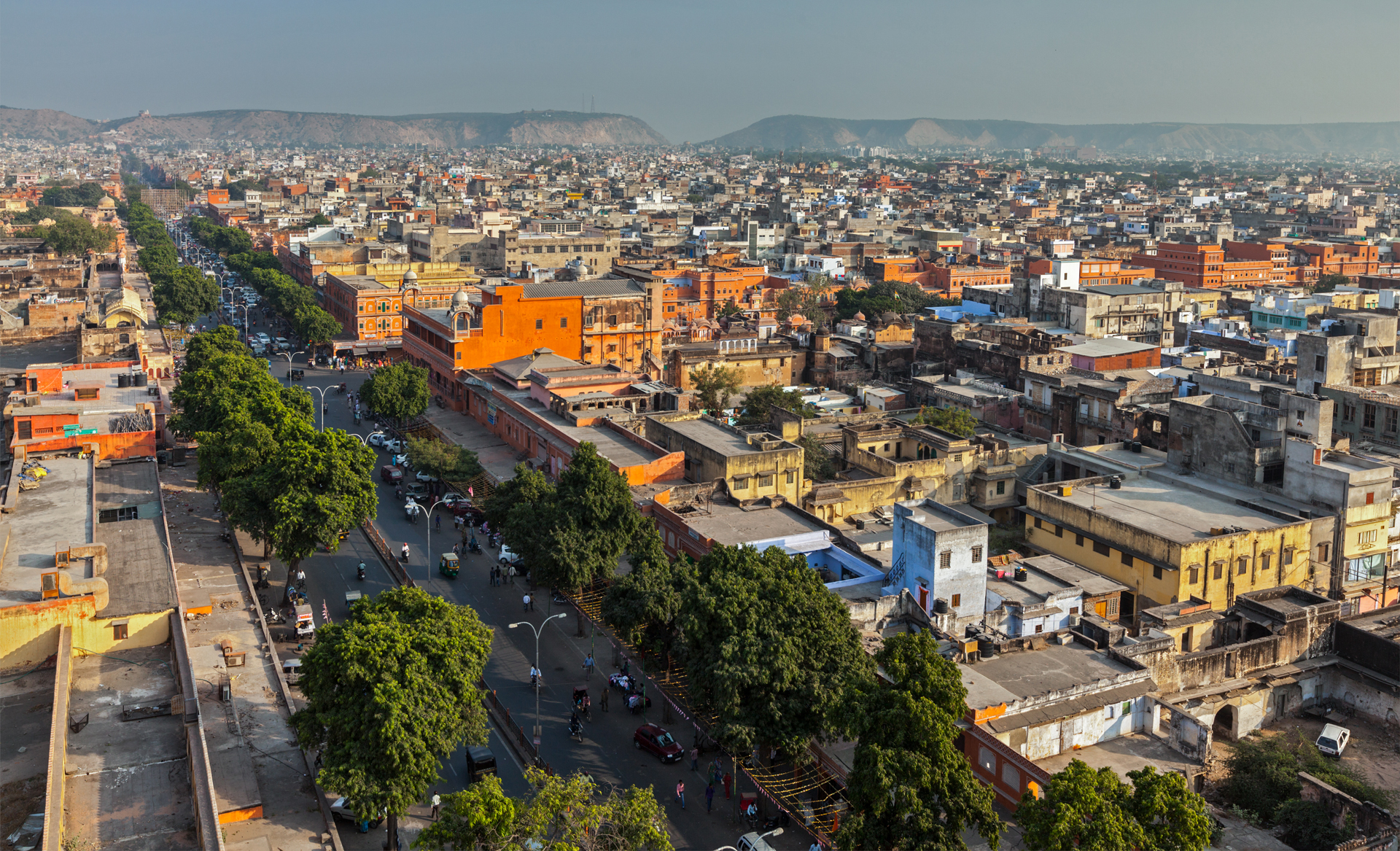

India is witnessing one of the worst heatwaves ever, with many parts of the country experiencing consistent temperatures of over 50ºC. Studies have shown that cities, in particular, are getting warmer and more humid due to urbanisation and declining green cover.
Researchers from the Indian Institute of Technology-Bhubaneswar have found that urbanisation alone is responsible for 60 percent of the warming trend in Indian cities. What’s more, the findings revealed that Tier-2 cities in eastern India showed higher increase in temperatures than other cities, according to the team from the institute’s School of Earth, Ocean and Climate Sciences.
The study, titled ‘Urbanization and regional climate change-linked warming of Indian Cities’, published in the journal Nature Cities, analysed temperature data from several decades and correlated it with urban expansion metrics.
A total of 141 cities in India were chosen for this study and the contribution of local urbanisation and climate change were monitored using satellite images from NASA and other agencies. The scientists used MODIS Aqua satellite night-time land surface temperature (NLST) data — which is a measure of land surface heat radiation at night — along with elevation data from 2003 to 2020 to analyse temperature trends.
Urban Heat Island Effect
According to the study, one of the primary reasons for this phenomenon is the reduction in vegetation and green spaces, which play a vital role in cooling the environment. On the other hand, concrete and asphalt store heat during the day and release it during the night, preventing the cooling that typically occurs in natural landscapes. Moreover, increased human activities, vehicular emissions, and industrial output contribute to higher levels of greenhouse gases, further amplifying the heat.
This transformation exacerbates the “urban heat island” effect, where urban areas experience significantly higher temperatures than their rural counterparts. The study stated that the urban population share will reach 68 per cent by 2050.
Urbanisation is one of the most visible and irreversible human interventions modifying land use and land cover, and it is a key driver of socioeconomic change. Despite accounting for only ~1% of the land, cities house more than half of the world’s inhabitants, according to the study.
The study states that urbanisation and the associated energy demands lead to the production of greenhouse gases and associated emissions, contributing to climate change. Furthermore, due to the dense population and infrastructure of urban areas, they are on the frontlines of climate-change impacts such as heatwaves, extreme weather events and flooding. Urbanisation alone has led to an overall 60% enhancement in warming in Indian cities, the study stated.
Night Temperatures Rising Across India
Since heat is trapped in built-up structures, greater urbanisation has a direct correlation with the rise in night temperatures. The study found that almost all the cities across India witnessed an increase in nighttime land surface temperature (NLST) trends, with an overall mean rate of 0.53+/-0.19 degrees Celsius per decade over this period. Data shows that night temperatures have been rising across India, and it is not limited to cities. But, the rate at which cities are heating up is higher than that of non-urban areas. The spike was jarring in cities, which are warming at a rate of 0.2 ± 0.15 degrees Celsius per decade.
This highlights an alarming trend of cities experiencing enhanced warming — nearly double — relative to the entire country. Certain parts of the country also experienced warming at a much faster rate. The warming trend documented throughout India is not homogeneous as per the study. Some areas, including the northwestern, northeastern and southern regions, are undergoing a comparatively more pronounced increase in NLST than other parts of the country.
Experts say that excess concretisation and diminishing green cover in cities lead to heat getting trapped, slowing down the cooling process. The daytime temperatures in an urban centre usually take longer to fall, as compared to agriculture or forest areas, increasing the heat stress of a region.
Differential Approach to Combat Urban Warming
The scientists advocate for a “differential approach” to effectively combat urban warming. This essentially means that each city requires customised solutions tailored to its specific challenges and conditions.
Urban planning-based mitigation measures will have a greater impact on cities with a larger urban contribution, whereas large-scale intervention will be necessary to reduce warming in cities dominated by regional effects, as per the study.
The Global Climate Risk Index 2021 had stated that India is the seventh most profoundly impacted nation by climate-related extreme weather phenomena. The study stated that India will be one of the most vulnerable countries to the impact of climate change.
Moreover, a 2017 study published in the journal Science Advances found that the rise in summer mean temperatures in India (from 1960-2009) corresponds to a 146% increase in the probability of heat-related mortality events of more than 100 people.
Leave a Comment