

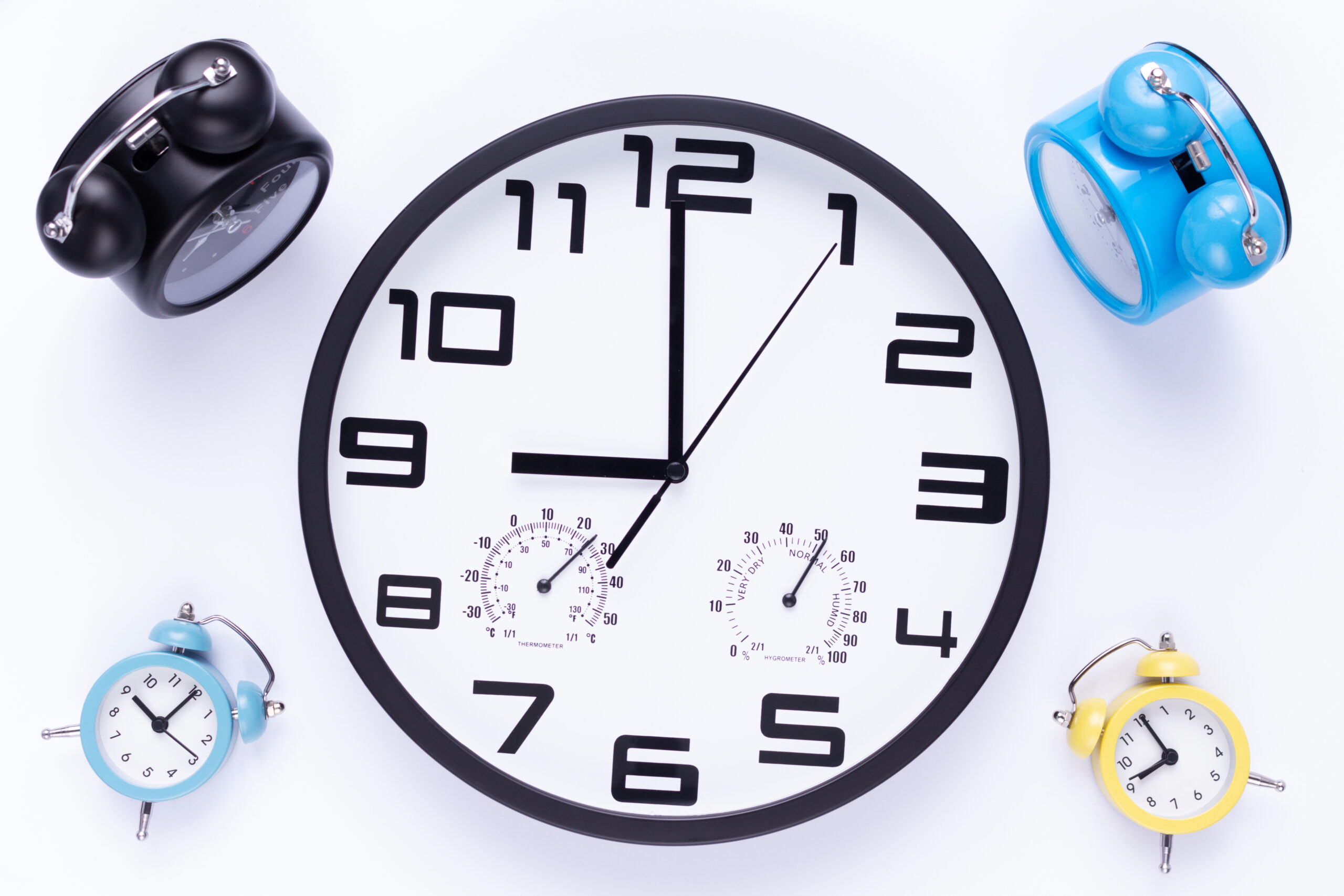

Ever wondered what the “o” in “o’clock” stands for? If you thought it was just a quirky part of time-telling, think again! 🤯 It turns out this tiny letter has a fascinating story behind it — and it’s time to uncover it!
Recently, a fashion designer named @jenny_nuel1 sparked a debate on Threads with a question that many of us had never even thought to ask: “What does the ‘o’ in ‘o’clock’ actually mean?”
From “zero” to “Omega” to even “oida” (which means “old person” in Viennese slang), people had all kinds of wild guesses! But, the correct answer was lurking among the many responses: the “o” in “o’clock” actually stands for… drumroll, please… “of the.” 🤔
A Throwback to the Time When Clocks Were New!
Let’s travel back in time. ⏳ When clocks were first invented, they were a pretty big deal! Before clocks, people mostly used sundials to tell time (imagine having to rely on the sun’s shadow to know when it’s lunch!). So, when clocks arrived, they needed a way to make sure everyone knew they were talking about this fancy new invention.
That’s when people started saying things like, “It’s 3 of the clock” to specify the time according to the clock. Over time, “of the clock” got shortened to “o’clock” — and voilà, we got the phrase we still use today!
Did You Know?
- The Apostrophe Mystery: The apostrophe in “o’clock” exists because it’s a contraction. The experts at the Britannica Dictionary confirm that “o’clock” is indeed short for “of the clock.”
- The ‘OK’ Twist: Just like “o’clock,” the word “OK” also has a quirky origin. Back in the 1820s and 1830s, humorists loved to deliberately misspell words as part of their jokes. “All correct” became “oll korrect” or “OK,” and it just stuck!
Why ‘O’clock’ Is Still Relevant Today!
You might wonder why we still say “o’clock” even in today’s digital age, where most of us rely on our smartphones instead of a wall clock. The answer? Tradition! It’s become a way to connect us with a simpler past when time-telling itself was a marvel.
And it’s not just English that has this fun quirk. In Irish, you might hear “a chlog,” while in French, it’s “heures,” but the idea of specifying “of the clock” still translates across cultures.
Wrapping It Up: Time to Spread the Word!
So next time you glance at your watch and say, “It’s 5 o’clock,” you’ll know there’s a whole lot of history packed into those two little words. You’ll be in the kn-o-w!
Now, go ahead and drop this fun fact at your next gathering or online post — and watch the faces light up with surprise! After all, who knew that something as mundane as the time could have such a cool story?
Got any more words or phrases you’re curious about? Drop them in the comments below! Let’s keep this history hunt going!

Leave a Comment