

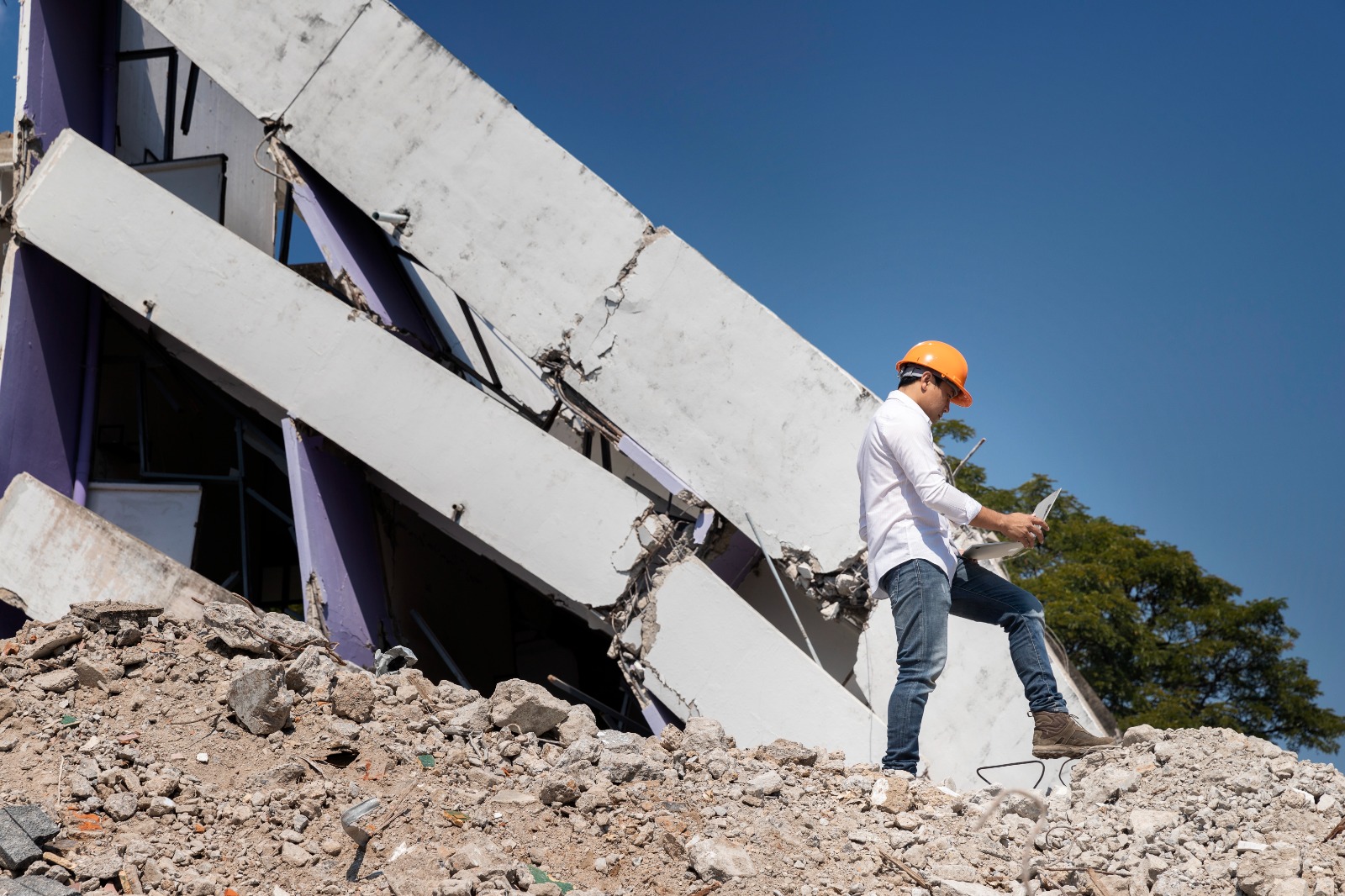

Taiwan was hit by its biggest earthquake in around 25 years on 4 April, 2024. At least nine people died and more than 800 got injured. While Taiwan’s earthquake monitoring agency said the quake was 7.2 magnitude, the US Geological Survey (USGS) put it at 7.4.
The massive earthquake damaged dozens of buildings and prompted tsunami warnings that extended to Japan and the Philippines before being lifted.
The epicentre of the quake was located at 18 kilometres south-southwest of Hualien County in eastern Taiwan. Multiple aftershocks were experienced, and one of them was 6.5 magnitude, as per USGS.
According to Taipei’s Central Weather Administration’s Seismology Center, the quake was the strongest since one of 7.6-magnitude struck in September 1999, killing around 2,400 people in the deadliest natural disaster in the island’s history.
Why So Many Earthquakes?
Taiwan lies along the Pacific “Ring of Fire,” the line of seismic faults encircling the Pacific Ocean where 90% of the world’s earthquakes occur.
The island and its surrounding waters have registered about 2,000 earthquakes with a magnitude of 4.0 or greater since 1980, and more than 100 earthquakes with a magnitude above 5.5, according to the USGS. Taiwan’s worst quake struck on Sept. 21, 1999, with a magnitude of 7.6. The quake caused 2,400 deaths, injured around 100,000 and destroyed thousands of buildings.
The area is particularly vulnerable to temblors due to the tension accumulated from the interactions of two tectonic plates which may lead to sudden releases in the form of earthquakes.
The region’s mountainous landscape can magnify the ground shaking, leading to landslides. Several such landslides occurred on Taiwan’s eastern coast near the epicentre of earthquake on April 4.
What is The Ring of Fire?
The “Ring of Fire” is basically a string of hundreds of volcanoes and earthquake sites which runs along the Pacific Ocean. It is a semicircle or horse shoe in shape and stretches nearly 40,250 kilometres. The Ring of Fire traces the meeting points of numerous tectonic plates, including the Eurasian, North American, Juan de Fuca, Cocos, Caribbean, Nazca, Antarctic, Indian, Australian, Philippine, and other smaller plates, which all encircle the large Pacific Plate, according to a report by National Geographic.
The Ring of Fire witnesses so many earthquakes due to constant sliding past, colliding into, or moving above or below each other of the tectonic plates.
Taiwan experiences earthquakes due to the interactions of two tectonic plates — the Philippine Sea Plate and the Eurasian Plate.
How Well-equipped is Taiwan to Handle Earthquakes?
Taiwan is no stranger to powerful earthquakes yet their toll on the island’s 23 million residents has been relatively controlled thanks to its excellent earthquake preparedness. The high-tech island’s earthquake preparedness is among the most advanced in the world.
The island uses a robust early-warning system, has modern and strict seismic building codes, a world-class seismological network, and widespread public education campaigns on earthquake safety.
Following the devastating 1999 Chi-Chi earthquake, the island significantly upgraded much of its infrastructure. The government continually revises the level of quake resistance required of new and existing buildings — which may increase construction costs — and offers subsidies to residents willing to check their buildings’ quake resistance.
Taiwan is also pushing quake drills at schools and workplaces while public media and cell-phones regularly carry notices about earthquakes and safety.
These measures have significantly enhanced Taiwan’s resilience to earthquakes, helping to mitigate the possibility of catastrophic damage and loss of life.

Leave a Comment