

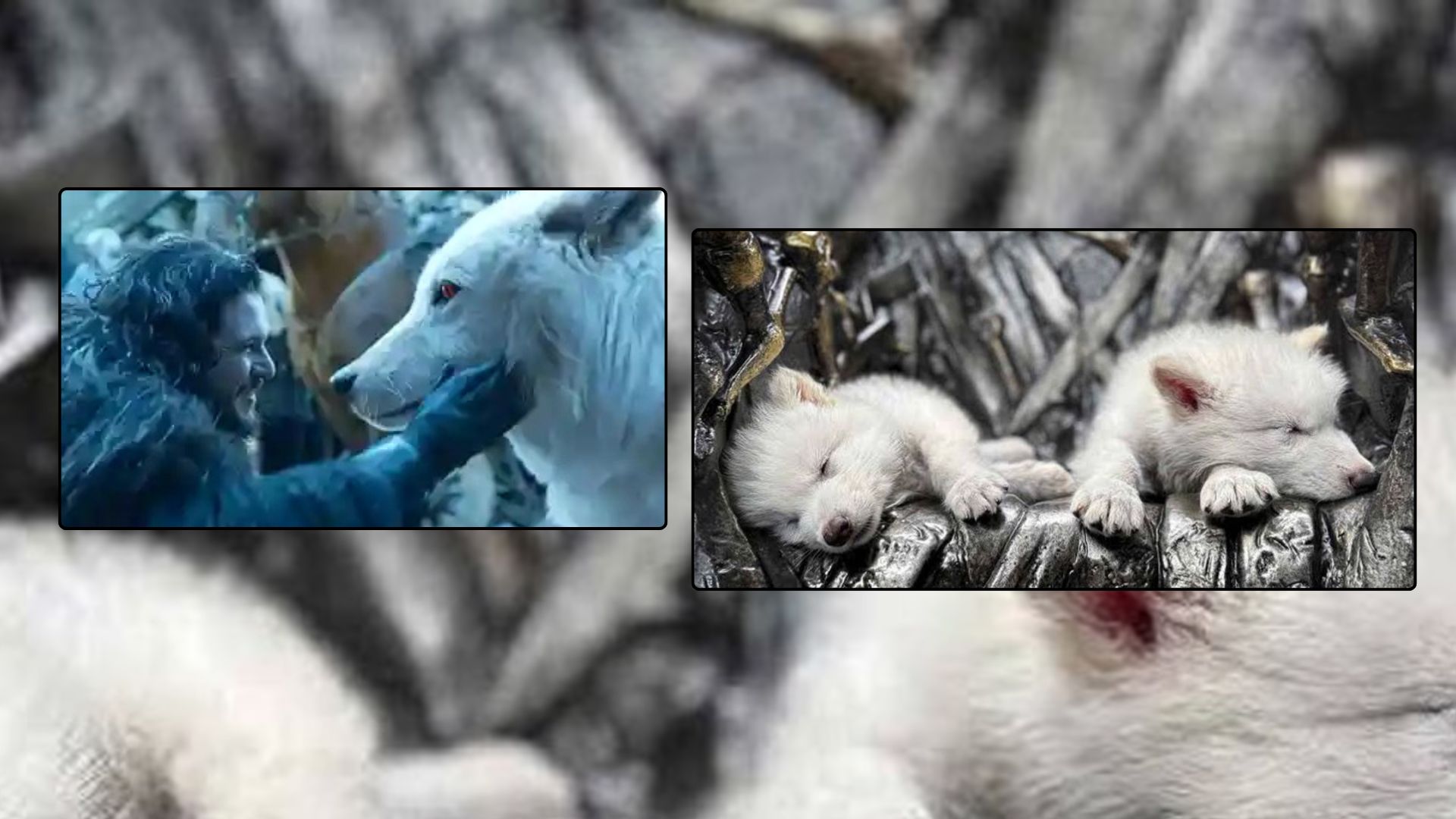

No, this isn’t a deleted Game of Thrones scene. This is real-life Jurassic Park—but without the chaos (yet). Scientists at Colossal Biosciences, a Texas-based genetic engineering company, have just done what sounded impossible: they’ve brought back the dire wolf, a species extinct for over 12,500 years!
Welcome back, Romulus, Remus, and our queen—Khaleesi
The world’s first “de-extincted” animals have just been born—and their howls have returned after 10,000 years. Imagine hearing a sound that once echoed during the Ice Age. Now that’s a real throwback.
What is De-Extinction?
It’s not science fiction anymore. De-extinction means reviving extinct species using ancient DNA, cloning, and gene editing. Think CRISPR, but turned all the way up to prehistoric level.
Colossal Biosciences used DNA from a 13,000-year-old tooth and a 72,000-year-old skull, combined with the genetic blueprint of today’s gray wolves, to engineer these legendary beasts.
Did You Know?
🔹 Dire wolves were real predators, not just fantasy! They roamed North America during the Ice Age and were bigger and stockier than today’s gray wolves.
🔹 The dire wolf was first made famous worldwide by HBO’s Game of Thrones, where each Stark child had one as a loyal companion.
🔹 The pups were named after legends:
Romulus & Remus – mythical twin founders of Rome
Khaleesi – the Mother of Dragons herself
🔹 This is the first-ever successful de-extinction, and scientists say the dodo, woolly mammoth, and even the Tasmanian tiger may be next.
🔹 Colossal has also cloned red wolves, one of the most endangered wolf species in the world, using a non-invasive blood cloning technique. Say hello to Blaze, Cinder, Ash, and Hope!
What’s Next in Prehistoric Comebacks?
🦣 Woolly Mammoth – In progress. They’re working on turning elephants into cold-resistant hybrids to revive Arctic ecosystems.
🦤 Dodo – Yes, the clumsy bird is set for a comeback using pigeon DNA.
🦘Tasmanian Tiger (Thylacine) – Australian scientists are partnering with Colossal to bring back this striped predator.
Why De-Extinction?
Beyond the wow factor, de-extinction tech could help with:
✅ Biodiversity restoration
✅ Saving endangered species
✅ Studying evolution and climate impact
✅ Rebalancing fragile ecosystems
But of course, ethical debates and ecological concerns are heating up too. Are we playing god? Or are we correcting history?
Colossal’s CEO Ben Lamm said:
“Any sufficiently advanced technology is indistinguishable from magic.”
And honestly? We’re howling in agreement.
From Myth to Reality
The return of the dire wolf isn’t just a scientific headline—it’s a glimpse into the future of what’s possible when imagination meets innovation. From Ice Age legends to Game of Thrones fantasy, and now real-life science, we’ve entered an era where extinction may no longer mean forever.
As we stand at the edge of this wild new world, one question remains:
If we can bring back the past, how will we protect the future?
Stay curious, stay informed, and keep watching this space—because science just got epic.

Leave a Comment