

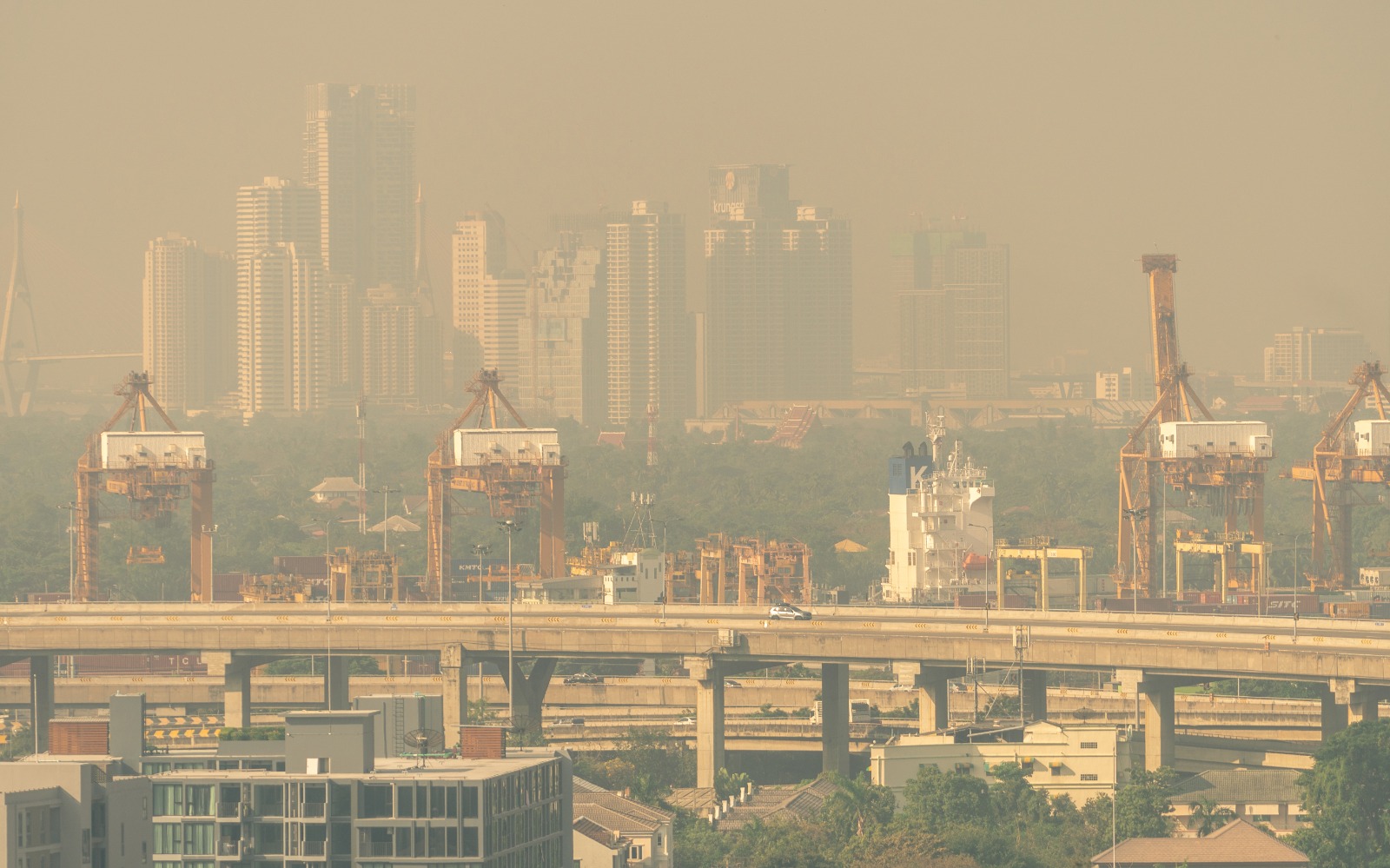

Amid growing concerns about worsening air quality, India was declared as the third-most polluted country in 2023, after Bangladesh and Pakistan, according to a report released by Swiss air quality monitoring body, IQAir. According to the ‘World Air Quality Report 2023’, with an average annual PM2.5 concentration of 54.4 micrograms per cubic meter, India had the third worst air quality out of 134 countries in 2023 after Bangladesh (79.9 micrograms per cubic meter) and Pakistan (73.7 micrograms per cubic meter).
On the other hand, Delhi, became the capital city with the poorest air quality. Delhi’s PM2.5 levels worsened to 92.7 micrograms per cubic meter in 2023. It was 89.1 micrograms per cubic meter in 2022. This is the fourth consecutive time Delhi has emerged as the world’s most polluted capital city.
Meanwhile, Bihar’s Begusarai was termed the world’s most polluted city with an average PM2.5 concentration of 118.9 micrograms per cubic meter. It was followed by Guwahati (105.4 micrograms per cubic meter) and Delhi (92.7 micrograms per cubic meter) at second and third spot. Mullanpur in Punjab (100.4 micrograms per cubic meter) and Pakistan’s Lahore (99.5 micrograms per cubic meter) were the fourth and fifth most polluted places. Greater Noida at 88.6 micrograms per cubic meter was the most polluted, ranking 11th, across the National Capita Region after Delhi. Gurugram at 84 micrograms per cubic meter was at 17th. Other Indian cities featuring in the top 50 most polluted cities of the world list included Muzzafarnagar (16), Arrah (18), Dadri (19), Patna (20), Faridabad (25), Noida (26), Meerut (28), Ghaziabad (35) and Rohtak (47).
The top 5 most polluted countries in the world in 2023 included: Bangladesh, Pakistan, India, Tajikistan and Burkina Faso. Seven countries which met the WHO annual PM2.5 guideline (annual average of 5 µg/m3 or less) included Australia, Estonia, Finland, Grenada, Iceland, Mauritius, and New Zealand.
The report by IQAir summarises PM2.5 air quality data from 7,812 cities spanning 134 countries, regions, and territories. It sourced the data from 30,000 air quality monitoring stations operated by research institutions, governmental bodies, universities and educational facilities, non-profit organizations, private companies, and citizen scientists.
83 of 100 Most Polluted Cities are in India
Never before has one country dominated the top spots for the worst air quality to the extent that India does. Nine of the top 10 most polluted cities are in India, up from six the previous year. Meanwhile, 42 cities in the top 50 are in India, up from 39; and an astounding 83 cities in the top 100 are Indian (up from 63 and 65 in the previous two years). Across India, 1.3 billion people, or 96% of the population, live with air quality seven times higher than WHO guidelines, according to the report.
How Dangerous is PM2.5?
PM2.5 is a very complex mixture of gases and particles that are suspended in the air, and it’s defined by size. PM stands for particulate matter, and 2.5 represents its size—2.5 microns, or 1/30th the diameter of a single strand of hair. And it is PM2.5 pollution’s tiny size that makes it so deadly. The particles are small enough that they can enter different organ systems and the bloodstream: they can irritate the lungs and the respiratory system. PM 2.5 pollution is linked to increased rates of heart attack and stroke, and can cause oxidative stress that damages the body’s cells faster than they can repair themselves. Oxidative stress is associated with a variety of illnesses ranging from Parkinson’s disease to cancer. More recent research has shown that exposure to PM2.5 can also cause cognitive impairment in children.
WHO’s Recommended Levels
The impacts of PM2.5 pollution even at modest concentrations are so severe that in 2021, the World Health Organisation (WHO) tightened its recommended guidelines from an average of 10 micrograms per cubic meter to 5 micrograms per cubic meter.
According to the IQAir report, around 136 million Indian citizens face PM2.5 concentrations higher than the recommended levels as marked by the WHO. About 96% of the Indian population face PM2.5 levels that are seven times higher than the recommended levels. Over 66% of Indian cities have reported annual averages higher than 35 micrograms per cubic Meter.
Only 9% of more than 7,800 cities analyzed globally recorded air quality that met WHO’s standard.
Gaps In Air Quality Monitoring
The IQAir report also highlighted a worrying inequality. While it showed how dire the crisis is, it also exposes major gaps in monitoring. For example, in South Asia–the world’s top three most polluted nations–Bangladesh, Pakistan, and India are in that order. But in Bangladesh, only two places monitor air quality, while Pakistan has 10 sites. India monitors 256 cities. This increase in monitoring shows the Indian government’s awareness of the country’s pollution problem, and the way to begin addressing it is to have a robust monitoring network, which India is actively doing.
There are also lack of monitoring stations in countries in Africa, South America and the Middle East, which results in a dearth of air quality data in those regions. According to IQAir, only 24 of 54 African countries had sufficient data available from their monitoring stations. Several countries that ranked high on the most polluted list last year were not included for 2023 due to a lack of available data. They include Chad, which was the most polluted country in 2022. The report only has data from 79 places in Africa and 219 in all of Latin America and the Caribbean. In sharp contrast, the United Kingdom alone has 219 monitoring sites, Europe 2,004, and the US has 3,242.
A Global Problem
IQAir found that 92.5% of the 7,812 locations in 134 countries, regions, and territories where it analyzed average air quality last year exceeded WHO’s PM2.5 guidelines. Only 10 countries and territories had “healthy” air quality: Finland, Estonia, Puerto Rico, Australia, New Zealand, Bermuda, Grenada, Iceland, Mauritius and French Polynesia.
In Asia, however, pollution levels rebounded across much of the region. In Southeast Asia, only the Philippines saw a drop in annual pollution levels compared to the previous year. Indonesia was the most polluted country in the region, with a 20% increase compared to 2022. Indonesia, Vietnam and Thailand all had cities that exceeded WHO PM2.5 guidelines by more than 10 times, according to the report.
Climate Change Exacerbating Pollution
Significantly, the report warns that human-caused climate crisis, driven by the burning of fossil fuels, plays a “pivotal” role in influencing air pollution levels. Fossil fuel emissions account for 65% of global CO2 emissions and are also the primary cause of the majority of PM2.5-related deaths, it says, highlighting the interconnected relationship between air quality and climate change.
The climate crisis is altering weather patterns, leading to changes in wind and rainfall, which affects the dispersion of pollutants. Climate change will only make pollution worse as extreme heat becomes more severe and frequent. The climate crisis is also leading to more severe wildfires in many regions and longer and more intense pollen seasons, both of which exacerbate health issues linked to air pollution.
Leave a Comment