

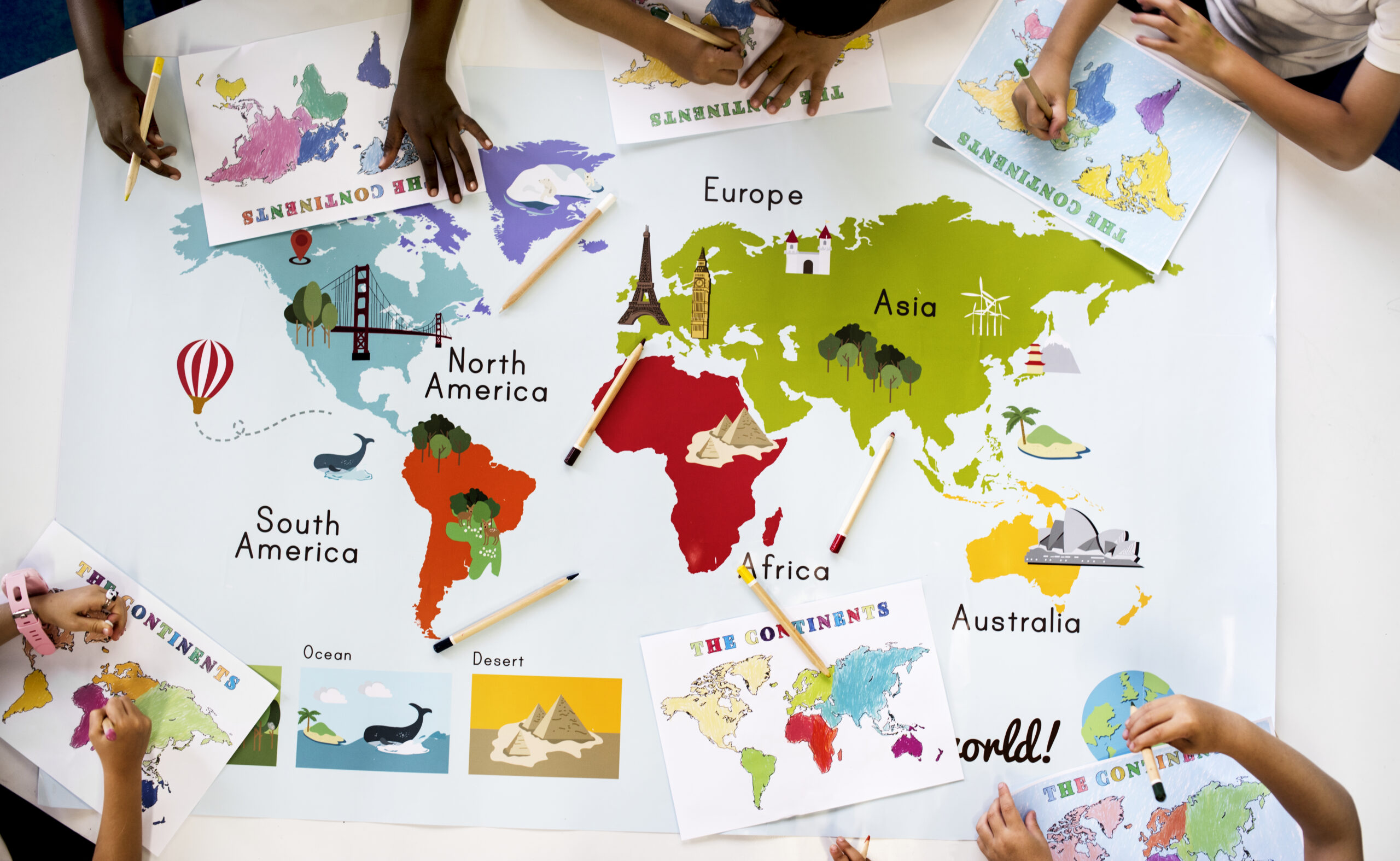

Brace yourselves for a mind-blowing revelation that’s about to change your geography game! For years, we’ve all been taught that there are seven continents on Earth: Africa, Antarctica, Asia, Australia, Europe, North America, and South America. But guess what? A new study claims there are actually SIX continents. Yup, you read that right.
What’s the Big Deal?
Researchers at the University of Derby have made a shocking discovery. According to Dr. Jordan Phethean and his team, the continents of North America and Europe haven’t actually broken up as we thought. Instead, they’re still stretching and in the process of breaking apart!
The Study
The study focused on Iceland, that volcanic island between the Greenland Sea and the North Atlantic Ocean. Traditionally, we believed Iceland formed around 60 million years ago when the mid-Atlantic ridge (the boundary between Eurasian and North American tectonic plates) started to separate, creating a hot mantle plume that became Iceland.
But here’s the twist! The new study found evidence that challenges this long-held belief.
North America and Europe: One Continent?
The researchers analysed tectonic plate movements in Africa and suggested that Iceland and the Greenland Iceland Faroes Ridge (GIFR) contain submerged fragments from both the North American and European continents. This means North America and Europe are still technically connected and should be considered one continent, not two.
Rifted Oceanic Magmatic Plateau (ROMP)
This newly recognized feature is called the “Rifted Oceanic Magmatic Plateau” or ROMP for short. Think of it as finding the Lost City of Atlantis – fragments of a lost continent submerged beneath the sea and covered by lava flows.
Dr. Phethean explained, “By studying the evolution of rifting in the volcanic Afra region in Africa and comparing it to Iceland, we see that these two regions are evolving similarly.”
Did you know?
- Iceland’s formation is linked to the mid-Atlantic ridge, a boundary where the Eurasian and North American tectonic plates are moving apart.
- The concept of ROMP suggests that what we know about Earth’s tectonic plates might be just the tip of the iceberg!
- The mid-Atlantic ridge is the longest mountain range in the world, running for about 16,000 km (10,000 miles) underwater!
What’s Next?
If this study is accurate, it means we’ve got some serious rethinking to do about our planet’s geography. The idea that Europe and North America are still breaking up and should be considered a single continent is controversial but fascinating.
Dr. Phethean said, “While it’s controversial to suggest the GIFR contains a large amount of continental crust and that the European and North American tectonic plates have not officially broken up, our findings suggest this is the case.”
Final Thoughts
This discovery is a game-changer for Earth science. It’s like finding hidden chapters in a book we thought we’d read cover to cover. So next time you’re in geography class or watching a nature documentary, remember this mind-blowing fact: there might only be six continents on Earth!
Stay curious, and keep exploring the wonders of our planet!
Follow Us for More Mind-Blowing Facts!
Want more amazing revelations like this? Follow us on Instagram and Facebook for your daily dose of science, fun facts, and trivia!

Leave a Comment