

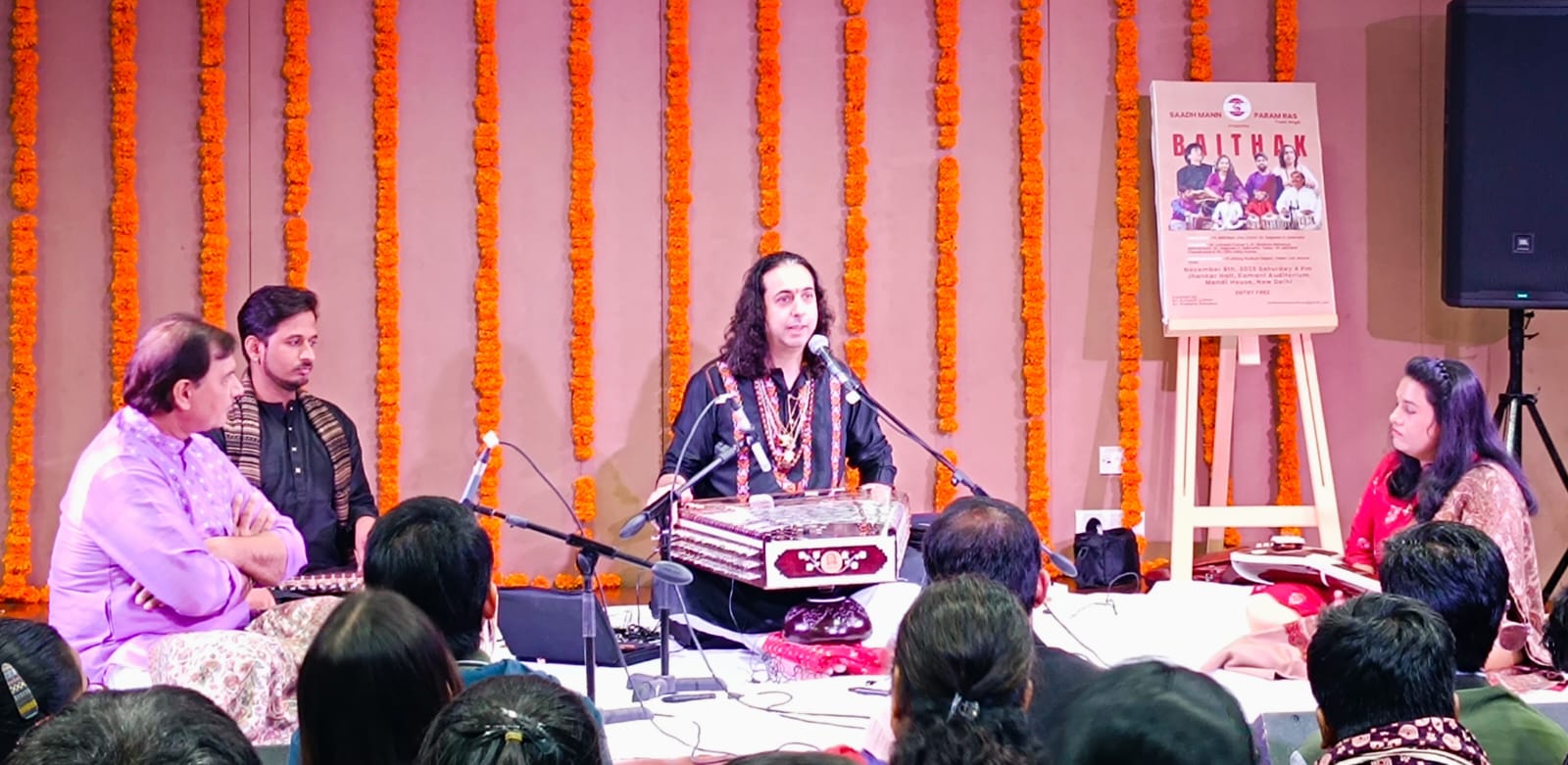

A spellbinding Santoor recital by Pandit Abhay Sopori, blending classical precision with soulful expression. The magic woven by hundred strings of divinity.
There are some evenings when music doesn’t just fill the air — it fills your soul. The feeling lingers on and touches the chords of your heart. A performance by Pandit Abhay Rustum Sopori, the acclaimed santoor maestro from Kashmir, was one such experience that transcended music and became a journey of emotion, heritage, and divinity.
Pandit Abhay Sopori’s Santoor recital was held recently at the Kamani Auditorium in Delhi, organised by Saadh Mann Param Ras. The auditorium was packed long before the maestro took the stage.
The amber lighting and a serene setup, with the santoor resting at the center, created an aura of calm anticipation. As the tanpura drone began, a hush fell over the hall — the kind of silence only deep respect can bring.
The Performance Unfolds
Pandit Abhay Sopori began with ‘Chhand’, one of the specialties of Sopori Baaj— his father Pandit Bhajan Sopori’s style. His hands moved effortlessly across the hundred strings of santoor — precise yet fluid, like flowing water that knows its own path.
The Santoor or Shata tantri veena —as called in Sanskrit, has a profound spiritual resonance, and stands apart among stringed instruments. The lilting sound of Santoor carried the fragrance of the valley as if the mountains and rivers had found a voice of their own. Each note seemed to shimmer like sunlight on water. The delicate balance of precision and spontaneity in the recital drew the audience into a meditative space.
As the tempo built, Ustad Akram Khan accompanied on tabla, weaving rhythm into melody. The tabla brought rhythmic energy that echoed like a heartbeat. Divyansh Srivastava accompanied on Sur Santoor and Paushali Datta on Tanpura. The maestro’s subtle glances towards his accompanists showed a deep, almost conversational connection — the hallmark of true classical dialogue.
What sets Pandit Abhay Sopori apart is his ability to weave tradition and innovation seamlessly. While his music remains rooted in the classical foundation passed down through the 300-year-old legacy of the Sopori family, he brings to it a freshness that feels timeless.
Music That Connects Beyond Words
Pandit Abhay Sopori communicated — not just through the strings of santoor but through the way he connected with the audience. His brief introductions to each piece gave context, yet left enough mystery for the audience. Every expression, every pause between notes, seemed to hold emotion.
After every crescendo, the hall reverberated with applause, yet the atmosphere remained deeply peaceful. It was one of those moments when music goes beyond entertainment and becomes communion between the artist and the audience.
The interplay between the santoor and tabla reached its peak towards the end. The tempo quickened, the beats grew more intricate, and yet, within the energy, there remained a sense of grace and divinity. After the final note the fully packed hall resonated with huge applause followed by a standing ovation out of respect and gratitude for the breath taking performance.
Reflections
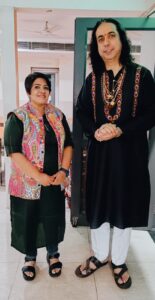 As the final strains of the santoor faded, I realised that this wasn’t just a concert; it was a conversation between tradition and the present, between sound and silence. Pandit Abhay Sopori’s Santoor recital bridges worlds: the classical and the contemporary, the personal and the universal.
In a world that moves so fast, concerts like these slow us down and quiet the noise inside us. The santoor, with its hundred strings, mirrors life itself — fragile, layered, complex, yet capable of the most beautiful harmony when played with care.
As I stepped out of the auditorium into the cool Delhi night, the sounds of the city felt distant, almost intrusive. I felt like I was carrying a part of music with me — the sound of serenity and the echo of the valley. The ethereal resonance of the strings lingered in my mind long after the concert concluded. It reminded me how classical music, when played with such devotion, can still speak to every generation.

Leave a Comment