


How Does the Internet Work?
Imagine sending a message to your friend sitting miles away. You type “Hi” and press send, and within seconds, they receive it. But have you ever wondered how your message travels so fast? Welcome to the fascinating world of the internet! Let’s break it down in simple terms.
What is the Internet?
The internet is a giant network that connects millions of computers and devices worldwide. It’s like a massive web of roads, where data (like messages, videos, and images) travels from one place to another at lightning speed. This data doesn’t fly in the air magically—it follows specific pathways!
The Backbone of the Internet
The internet works through a combination of satellites, undersea cables, fiber optics, and wireless networks. Let’s understand how each of these helps.
Undersea Cables – The Hidden Highways
Most of the world’s internet data (about 99%!) is transmitted through undersea fiber optic cables. These cables are laid deep under the ocean and connect continents. They are super-fast and carry tons of data every second!
Did you know? The first undersea cable was laid in 1858 for telegraph communication between the USA and the UK. Today, thousands of such cables keep the internet running globally!
Satellites – The Space Messengers
Satellites also help in providing internet, especially in remote areas where cables can’t reach. Geostationary satellites orbit the Earth and beam internet signals to ground stations, which then distribute it through mobile networks or Wi-Fi.
Did you know? Companies like SpaceX’s Starlink and Amazon’s Project Kuiper are launching thousands of satellites to provide high-speed internet everywhere, even in deserts and mountains!
Fiber Optic Cables – The Speed Kings
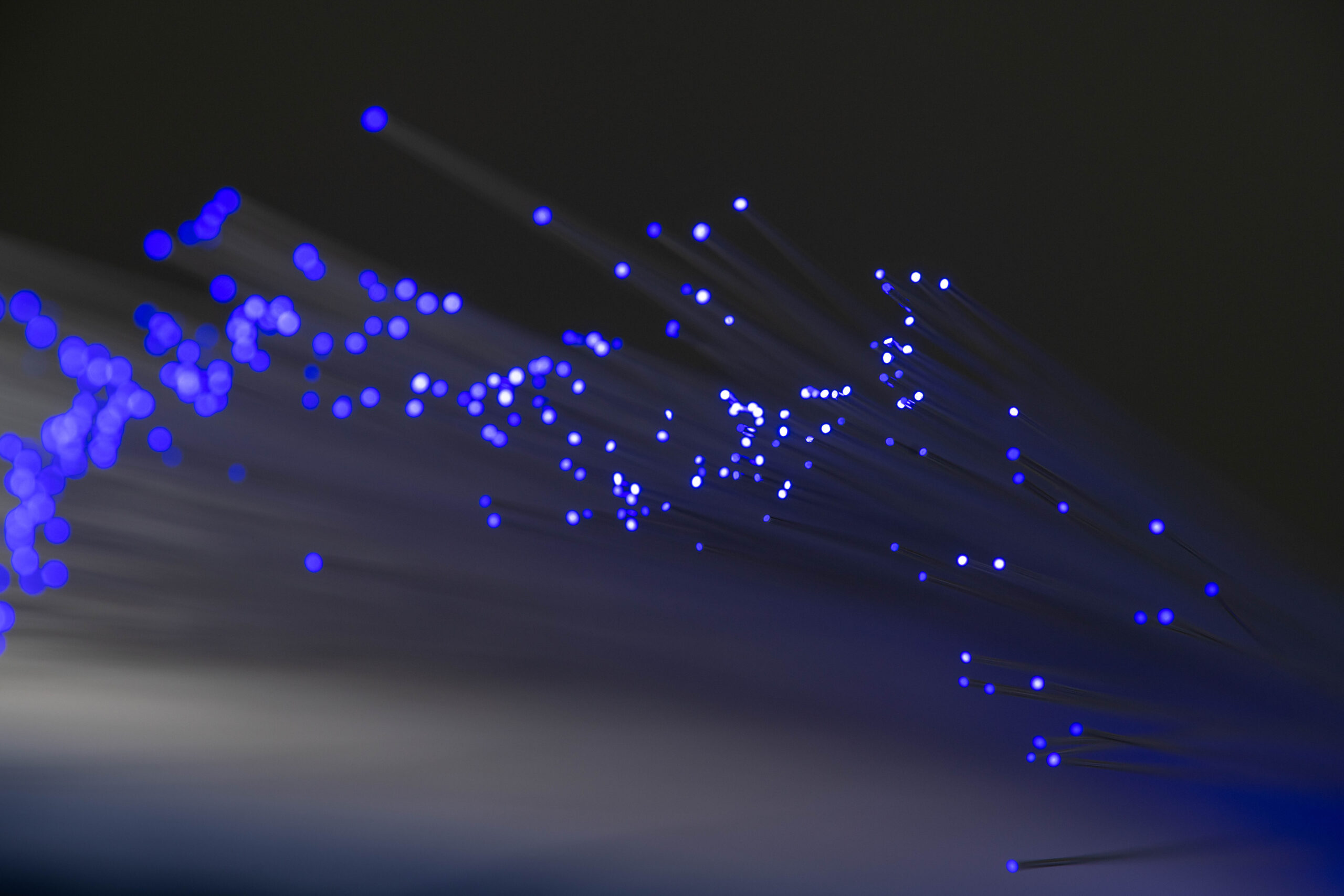
On land, internet travels through fiber optic cables, which use light to transmit data. These cables are buried underground and connect homes, offices, and even mobile towers.
How Does Your Data Travel?
Let’s say you search for “What is the speed of light?” on Google. Here’s what happens in milliseconds:
- Your device sends the request to your Internet Service Provider (ISP) (like Jio, Airtel, or BSNL in India).
- The ISP sends this request through undersea cables or satellites to Google’s data center.
- Google finds the answer and sends it back through the same path.
- Within milliseconds, the answer appears on your screen!
Did you know? Google has its own undersea cable network connecting its data centers worldwide!
The Internet in India
India has one of the largest internet user bases in the world, with over 850 million users! Internet services are provided through broadband, fiber optics, mobile networks (4G/5G), and satellite internet.
- Jio and Airtel are expanding fiber networks across cities and villages.
- 5G is rolling out, making the internet even faster!
- Satellite internet by companies like OneWeb and Starlink is helping connect remote areas.
The Internet Around the World
- Fastest Internet? South Korea and Singapore have the fastest internet speeds.
- Biggest Data Users? The USA and China consume the most internet data.
- Deepest Cable? The SEA-ME-WE 3 cable is one of the longest, stretching 39,000 km from Europe to Asia!
Did you know? The internet’s total data transmission speed is estimated to be 1.1 zettabytes per year—that’s 1,100,000,000,000,000,000,000 bytes!
Future of the Internet
With 6G, AI, and quantum internet on the horizon, the future of the internet is faster, smarter, and more connected than ever! India is also investing in indigenous satellite internet and fiber expansion to ensure everyone gets high-speed connectivity.
Conclusion
The internet is a mind-blowing network of undersea cables, satellites, and fiber optics that connects the world in seconds. Next time you watch a YouTube video or chat with a friend, remember the incredible journey your data takes!
Now you know how the internet works! Share this with your friends and impress them with your knowledge!

Leave a Comment