

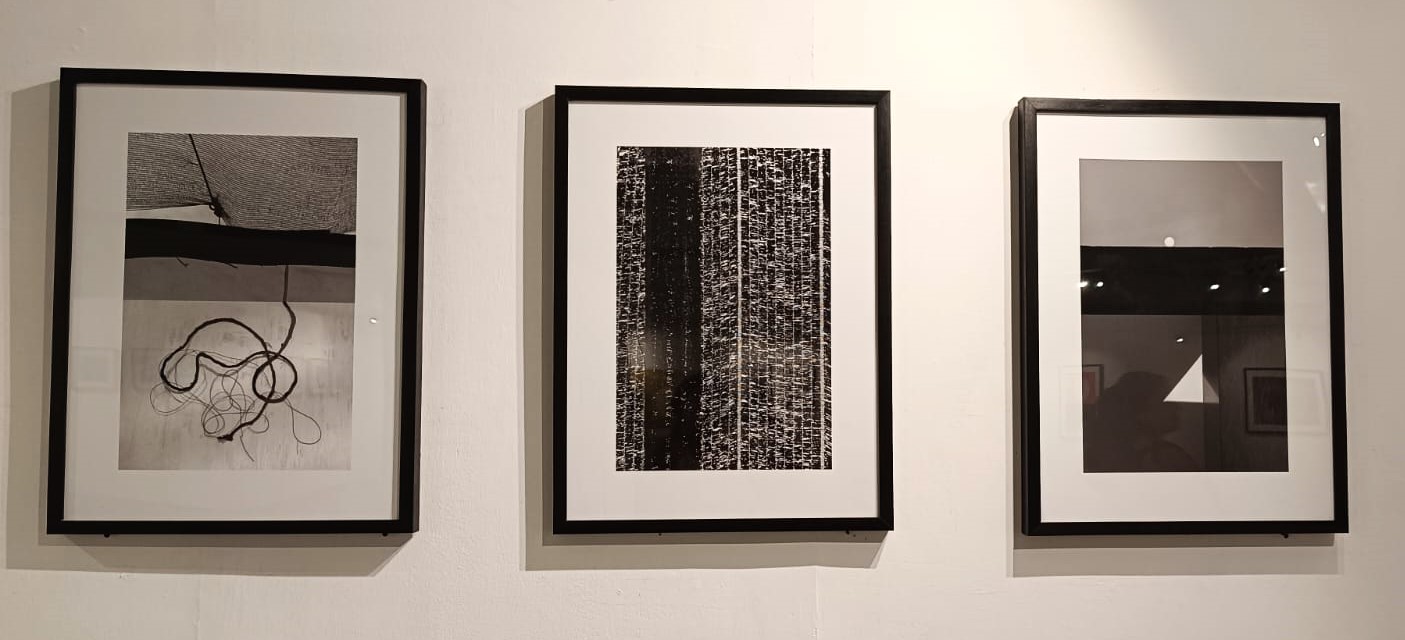

There are exhibitions you walk through, and then there are exhibitions that stay with you.
Unconfined, the recent exhibition by artist and photographer Ravi Shail at the India International Centre, belonged firmly to the latter.
Walking into the gallery, I expected a conventional photography exhibition—frames on walls, images of people, places or fleeting moments.
But Unconfined quickly revealed itself to be something more exploratory, where a photograph does not necessarily remain a photograph. It transforms.
It acquires layers, textures and new meanings. Images move beyond their original identity, entering a fascinating space between photography and art. And that is perhaps what made Unconfined such an interesting experience.
Held at the Main Art Gallery at the Kamaladevi Complex in IIC, the exhibition reflected Ravi Shail’s desire to move beyond the conventional boundaries associated with art and photography.
The artist, a recipient of the Lalit Kala Akademi National Academy Award and the National Photography Award, uses photographs as a starting point and transforms familiar visual experiences through mixed media, texture and artistic intervention.
Beyond Conventions and Categories
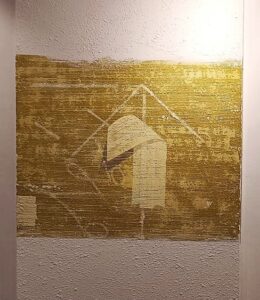 The title Unconfined perfectly captured the spirit of the exhibition.
To be unconfined is to resist containment. And throughout the exhibition, Shail liberated the photographs from the expectations we attach to them.
A photograph, traditionally, captures a moment, freezing something that existed before the camera. But what happens when that image is allowed to evolve?
What happens when photography enters into conversation with painting, texture, abstraction and imagination?
These questions quietly accompanied the viewer through Unconfined.
At first glance, something familiar can be recognised—a figure, a landscape, an object or a fragment from everyday life. But the longer the observation, the more the image begins to shift.
Details emerge. The photographs stop behaving like simple records of reality and become something far more intriguing.
That, perhaps, is one of the most engaging aspects of Ravi Shail’s exhibition. It does not insist on one way of seeing.
When Photographs Become Canvas
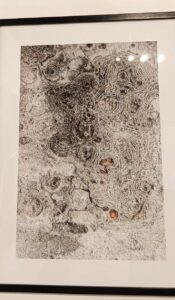
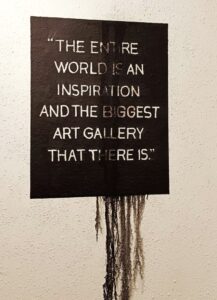
One of the central ideas behind Unconfined is the possibility of discovering art beyond established categories and conventional spaces.
Calling Unconfined merely an art or photography exhibition would perhaps be too limiting—which is precisely the kind of limitation the exhibition itself seems determined to challenge.
Ravi Shail’s works occupy an interesting space between photography and visual art.
A conventional photograph often comes with an expectation. We look at it as evidence of a moment, a place or a person. But mixed media disrupts that certainty.
Once Shail intervenes—adding layers, textures and other visual elements—the photograph evolves, becoming both image and object. It carries traces of reality while simultaneously moving away from it.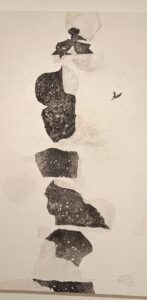
This makes the works particularly engaging. The viewer is constantly negotiating between what was originally photographed and what the artist has subsequently created.
Where does photography end? Where does painting, abstraction or artistic interpretation begin?
Unconfined does not seem interested in providing a clear answer. Instead, it makes the blurred boundary itself part of the larger experience.
Finding Art in the Ordinary
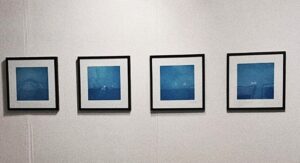
Unconfined draws inspiration from ordinary things and moments, sometimes as simple as a reflection in water, patterns created by light, textures of ageing walls or an enchanting view created by a shadow.
We live in an age of endless images. Our phones are overflowing with pictures we click– food, streets, vacations, friends and sunsets. On social media we scroll past dozens of photographs everyday.
The pictures have become almost inseparable from daily life. Yet, ironically, we may be looking less carefully than ever before.
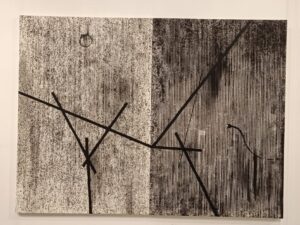
Unconfined asks us to slow down and observe carefully. It encourages us to pause and reconsider things we might otherwise overlook.
Ravi Shail appears to reclaim these overlooked moments.
His work suggests that the extraordinary does not always announce itself dramatically. Sometimes, it is hidden inside the ordinary, waiting for someone to see it differently.
Art and the Future of Photography
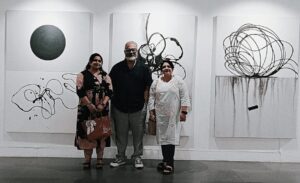
The exhibition also arrives at an interesting moment for photography.
Photography today is undergoing rapid transformation. Smartphones have made image-making universal, artificial intelligence is challenging traditional ideas of authorship, and digital technologies are continuously expanding what an image can become.
Against this changing landscape, Unconfined feels relevant because it refuses to treat photography as a fixed medium. Instead, it suggests possibility.
Perhaps the future of photography does not lie in defending strict boundaries between mediums. Perhaps it lies in crossing them.
Becoming Unconfined
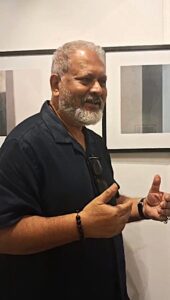
The best art exhibitions stay with you even after you leave the gallery.
As we stepped out of the gallery into the familiar surroundings of the India International Centre, everything seemed capable of becoming art- the birds on trees, the light falling on the pavement, even fragments of conversation.
I found myself thinking about the title again—Unconfined.
Perhaps being unconfined is not just about freeing art from the restrictions of medium. Perhaps it is also about freeing our own ways of seeing things.
A familiar object can reveal something entirely new if we are willing to pause and look beyond what is visible.
That is the quiet strength of Ravi Shail’s Unconfined.
It asks a simple but powerful question: Can Art happen on its own?
Yes it can! You just need to look again and perhaps, look beyond the frame.


Leave a Comment