

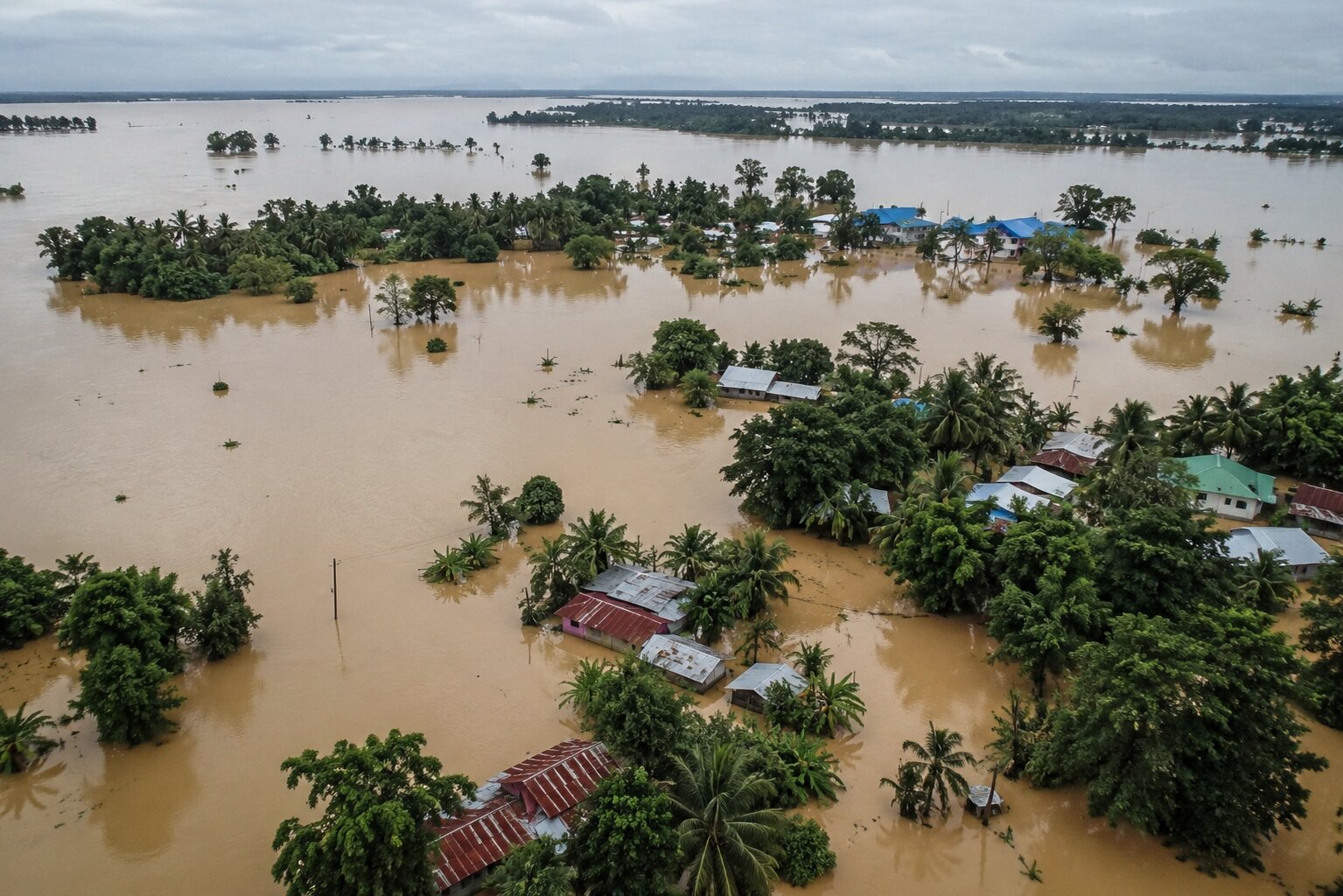

Every monsoon, Assam braces for rising waters. But the Assam floods of 2026 are more than another seasonal calamity—they are a stark reminder of how climate change, environmental degradation, and unchecked development are making natural disasters increasingly destructive.
For families living along the Brahmaputra and its tributaries, the arrival of heavy rain means preparing to flee at a moment’s notice. Valuables are moved to higher shelves, livestock is secured, and evacuation becomes a constant possibility.
As of 29 July 2026, Assam floods have claimed 75 lives, affected over 3 lakh people, inundated 622 villages, and submerged 45,341 hectares of cropland, according to the Assam State Disaster Management Authority (ASDMA). Rescue operations involving the Army, Air Force, NDRF, SDRF, Fire and Emergency Services, and volunteers continue across the state.
More Than Just Floodwater
Assam Floods are not just about overflowing rivers. They upend lives and livelihoods.
- Thousands of families are displaced and forced into relief camps or makeshift shelters.
- Standing crops and livestock—the backbone of rural incomes—are lost.
- Schools shut down, disrupting children’s education.
- Drinking water becomes contaminated, increasing the risk of water-borne diseases and skin infections.
- Many low-lying areas remain waterlogged for weeks or even months.
According to the Associated Press, nearly 700,000 people were displaced during the peak of the flooding, with around 300,000 taking refuge in government relief camps.
Why Does Assam Floods Every Year?
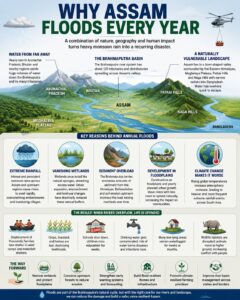
Assam’s geography makes it naturally vulnerable. Nestled between the Eastern Himalayas, Meghalaya Plateau, and surrounding hill ranges, the state receives enormous volumes of water flowing from Arunachal Pradesh, Bhutan, and neighbouring regions into the Brahmaputra River system.
Flooding itself is not new. For centuries, the Brahmaputra has overflowed during the monsoon, depositing nutrient-rich sediments that sustain Assam’s fertile floodplains. The problem today is that the floods are becoming more destructive.
Experts point to several interconnected causes:
- Extreme rainfall: Climate change is increasing the frequency of intense rainfall events.
- Loss of wetlands: Wetlands that once absorbed excess water have shrunk because of encroachment and urban expansion.
- Heavy sedimentation: Deforestation upstream increases soil erosion, raising riverbeds and making rivers overflow more easily.
- Construction on floodplains: Rapid development leaves rivers with less space to spread naturally.
Climate Change Worsening Assam Floods
Scientists agree that climate change does not create floods, but it makes them worse.
According to the IPCC, rising global temperatures allow the atmosphere to hold more moisture, leading to heavier rainfall across South Asia. Assam is therefore likely to experience more frequent and intense floods in the coming decades.
Environmental experts describe this growing climatic uncertainty as the “new normal” for the Northeast.
Wildlife Faces the Same Crisis

Floods don’t affect only people. They also transform ecosystems.
In Kaziranga National Park, seasonal floods are essential for maintaining wetlands and grasslands. But increasingly severe floods force rhinos, elephants, deer, and other wildlife onto highways and into nearby villages, increasing animal deaths and human-wildlife conflict.
Protecting wetlands and forests is therefore as important for people as it is for wildlife.
Beyond Rescue: Building Long-Term Resilience
Rescue teams have worked tirelessly to evacuate stranded residents and distribute food, clean water, medicines, and shelter. The Assam government has also announced relief, rehabilitation, and compensation packages for affected families.
But experts argue that emergency response alone cannot solve Assam flood crisis. Long-term solutions include:
- Restoring wetlands that naturally absorb floodwater.
- Protecting floodplains from encroachment.
- Improving river basin management across states and neighbouring countries.
- Investing in stronger flood forecasting and early warning systems.
- Building flood-resilient infrastructure.
- Promoting climate-resilient agriculture.
- Conserving upstream forests to reduce soil erosion.
A Warning Beyond Assam
The Assam government has described this year’s floods as the worst in 60 years. While floods are an integral part of the Brahmaputra’s natural cycle and cannot be eliminated, their devastating impact can be reduced through better planning and environmental stewardship.
Every monsoon, Assam reminds us of an uncomfortable truth: nature will always find space for water. The real challenge is whether we will make space for nature before the next flood does it for us.

Leave a Comment