

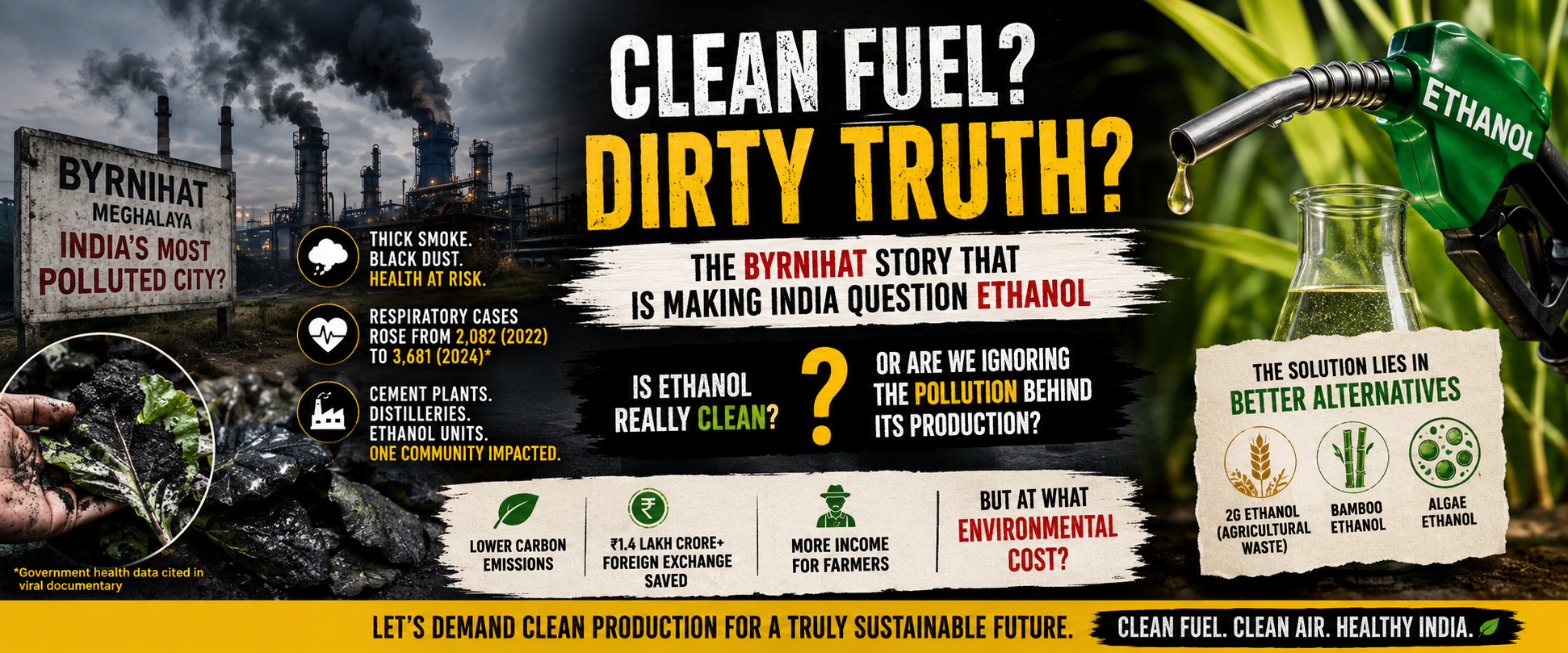


“What if the fuel being promoted as ‘green’ is helping create one of India’s dirtiest cities?”
That’s the question exploding across social media after a viral documentary by YouTuber Sarthak Goswami showed shocking scenes from Byrnihat — a town that has repeatedly appeared among the most polluted places in India.
In the video, black soot covers leaves and vegetables, factory chimneys release thick smoke, and residents describe worsening air quality and health problems. What made the documentary especially controversial is that one of the industries under scrutiny is an ethanol-producing plant.
For many viewers, it triggered an uncomfortable question: Is ethanol really as clean as we’ve been told?
The Viral Claims
The documentary highlights three major allegations made by local residents:
- Pollution increased significantly after industrial units expanded.
- Black dust now settles on homes, crops, and vegetables.
- Respiratory and skin-related illnesses have become more common.
What the available data actually shows
- Government health data cited in the documentary shows respiratory disease cases reportedly rose from 2,082 in 2022 to 3,681 in 2024.
- However, this does not prove that ethanol production alone caused the increase.
- The area contains multiple industries, including cement plants, distilleries, and other manufacturing units.
- The documentary itself acknowledges that there is no scientific evidence directly linking a specific death or illness to a particular factory.
Why Ethanol Is Suddenly Under Fire

India has aggressively pushed ethanol blending in petrol to reduce crude oil imports and lower carbon emissions.
The government says the programme has:
- Saved over ₹1.4 lakh crore in foreign exchange.
- Reduced dependence on imported crude oil.
- Generated additional income for farmers.
On paper, ethanol looks like a climate win.
But critics argue that the environmental story doesn’t end at the fuel pump. It also depends on how ethanol is produced.
The Part Nobody Talks About

1. Massive Water Consumption
According to Food Secretary Sanjeev Chopra, producing one litre of rice-based ethanol can require around 10,790 litres of water.
In a country already facing groundwater stress, that number has alarmed many environmental experts.
2. Industrial Wastewater
Ethanol production generates a by-product called vinasse.
If not treated properly, it can contaminate rivers, soil, and groundwater.
The Punjab Example

The debate intensified after the Malbros ethanol plant in Zira, Punjab was shut down in 2023 following months of protests.
A CPCB investigation later reported groundwater contamination linked to hazardous industrial waste. Residents claimed polluted water and declining agricultural productivity, while the company denied wrongdoing and continues legal proceedings.
So… Is Ethanol a Scam?
Not really.
Here’s the nuance that often gets lost online:
- Ethanol generally has lower lifecycle carbon emissions than petrol.
- Plants used to make ethanol absorb CO₂ while growing.
- Many countries use ethanol blending to cut fossil-fuel dependence.
The real issue is not necessarily ethanol itself — it is whether industries follow environmental rules while producing it.
The Better Alternative: 2G Ethanol

India is already investing in second-generation (2G) ethanol, which is made from:
- Rice straw
- Wheat stubble
- Sugarcane bagasse
This approach can reduce water use and help prevent stubble burning.
Researchers are also exploring bamboo and algae-based ethanol, which may have a smaller environmental footprint.
The Bigger Question India Must Ask
A fuel can be cleaner than petrol and still create local pollution problems if factories are poorly regulated.
The Byrnihat documentary may not prove that ethanol alone caused the city’s pollution. But it has succeeded in doing something important: forcing people to look beyond slogans like “green fuel” and ask how that fuel is actually produced.
Because a truly sustainable policy is not just about reducing emissions on paper. It is also about protecting the air, water, and health of the communities living next to the factories.
“The debate is no longer Petrol vs Ethanol. It’s Clean Fuel vs Clean Production.”
What do you think?
- Is ethanol being unfairly blamed?
- Or are we ignoring the pollution happening around industrial plants?


Interesting article! 👍 It’s a good reminder that clean energy also needs responsible production and proper environmental monitoring. Looking at both the benefits and the challenges helps create better solutions for everyone. Thanks for sharing this balanced perspective. 🌿🚗😊